Best overall: a professional ceramic coating with preparation matched to your paint. Best for highway commuters: front-end paint protection film plus coating. Best for hands-on owners: a DIY ceramic coating. This 2026 guide ranks service scopes by what your daily driver needs—not by the longest durability claim.
- The best ceramic coating for daily driver use starts with suitable paint preparation and a realistic maintenance routine.
- Supremeautonj provides ceramic coating and detailing for vehicle owners in North Haledon and North Jersey.
- Choose paint protection film for stone-chip exposure; ceramic coating does not replace impact protection.
- Choose DIY ceramic coating only when you can handle preparation, application, and the product’s curing instructions.
Why this matters
Your daily driver spends its life outside the showroom. Road grime, bird droppings, wet weather, and repeated washing make protection useful—but they also expose the limits of a coating bought on promises alone.
The right package protects prepared paint and fits the way you actually wash your car. A coating does not straighten dents, erase scratches, or make careless washing harmless. Choose the work your paint needs before choosing a durability label.
Supremeautonj provides ceramic coating, detailing, and paint protection film services for North Jersey vehicle owners. Use the package scopes below to discuss your vehicle’s condition and protection priorities; these are buying-guide categories, not named packages offered by the shop.
What makes the best ceramic coating for a daily driver?
For a 2026 daily driver, judge the complete job rather than the bottle applied at the end.
- Paint preparation: Washing and decontamination should address surface dirt and bonded contamination before application.
- Appropriate correction: Polishing should match the defects you want removed and the condition of the paint. More correction is not automatically better.
- Clear coverage: Confirm which surfaces receive protection. Painted panels, wheels, glass, and trim require their own suitability checks.
- Application conditions: The installer or owner needs conditions that follow the coating manufacturer’s instructions, including curing requirements.
- Manageable aftercare: Choose a coating you can maintain with careful washing, prompt contaminant removal, and compatible products.
- Protection fit: Separate easier cleaning from impact resistance. Coating and paint protection film solve different problems.
Ask for a written scope explaining preparation, correction, coated surfaces, and aftercare. A vague promise of shine tells you little about the work beneath it.
Ceramic coating packages at a glance
| Rank and package scope | Best for | Standout feature | Key limitation |
|---|---|---|---|
| 1. Paint-prep professional coating | Daily drivers with visible wash marks | Correction and coating planned together | Adds preparation work and requires ongoing care |
| 2. Light-prep professional coating | Paint already in good condition | Protection without unnecessary correction | Existing defects remain unless addressed |
| 3. Front-end PPF plus coating | Highway commuters concerned about chips | Physical film protection plus coated surfaces | More installation work; coverage must be specified |
| 4. DIY ceramic coating | Owners comfortable with detailing | Direct control over preparation and application | Application mistakes and curing conditions become your responsibility |
The order reflects a general buying decision, not measured product performance. Start with paint condition, then consider impact exposure and whether you want to do the installation yourself.
1. Paint-prep professional coating: best for visible wash marks
A paint-prep professional coating combines cleaning, decontamination, appropriate polishing, and ceramic coating application. It makes sense when your daily driver has visible swirls or a finish that needs improvement before protection.
Ceramic coating follows the preparation; it is not a substitute for it. Polishing can improve suitable surface defects, while deeper damage requires a separate assessment. Ask the installer to distinguish correctable marks from defects that should remain untouched.
Best for: Owners who want better-looking paint and coating protection in the same planned service.
Paint-prep professional coating pros
- Addresses suitable paint defects before protection goes on.
- Connects the preparation scope to the finish you want.
- Keeps assessment, polishing, and application within one professional workflow.
- Gives you a clear point to discuss maintenance before collection.
Paint-prep professional coating cons
- Requires more preparation than coating paint already in good condition.
- Cannot make every scratch disappear or restore missing paint.
- Still needs careful washing; coating does not prevent all future swirls.
What to request
Ask to see the paint under inspection lighting. Identify the marks that bother you, then ask which can be improved without chasing an unrealistic finish.
For your 2026 daily driver, prioritize visible improvement and sensible paint preservation over perfection in every hidden area. Confirm the expected result before the coating is applied.
Verdict: Buy a paint-prep professional coating when visible defects justify correction. Do not add polishing simply because a package contains it.
2. Light-prep professional coating: best for paint in good condition
A light-prep professional coating focuses on cleaning, decontamination, and application, with correction added only where the inspection justifies it. This scope suits paint that already meets your expectations.
New paint still needs inspection. Transport, handling, previous washing, or contamination can affect the surface before you take ownership. Vehicle age alone does not establish whether polishing is necessary.
Best for: Owners satisfied with their existing finish who want professional ceramic coating without unnecessary correction.
Light-prep professional coating pros
- Keeps the scope focused on the paint’s actual needs.
- Avoids treating extensive polishing as a default requirement.
- Provides professional application without turning the job into a full appearance restoration.
- Makes an appropriate starting point for discussing a recently acquired vehicle.
Light-prep professional coating cons
- Leaves existing scratches and swirls unless correction is included.
- Relies on a proper inspection rather than an assumption that the paint is clean.
- Can disappoint you if you expect the coating itself to improve visible defects.
What to request
Have the installer explain what preparation means for your specific vehicle. A wash alone and a decontaminated, application-ready surface are not interchangeable descriptions.
Look at the finish in daylight before approving the scope. If you already dislike its appearance, reconsider the correction plan rather than expecting the coating to hide the problem.
Verdict: Buy a light-prep professional coating when inspected paint already looks the way you want. Skip unnecessary correction, not necessary preparation.
3. Front-end PPF plus coating: best for highway chip exposure
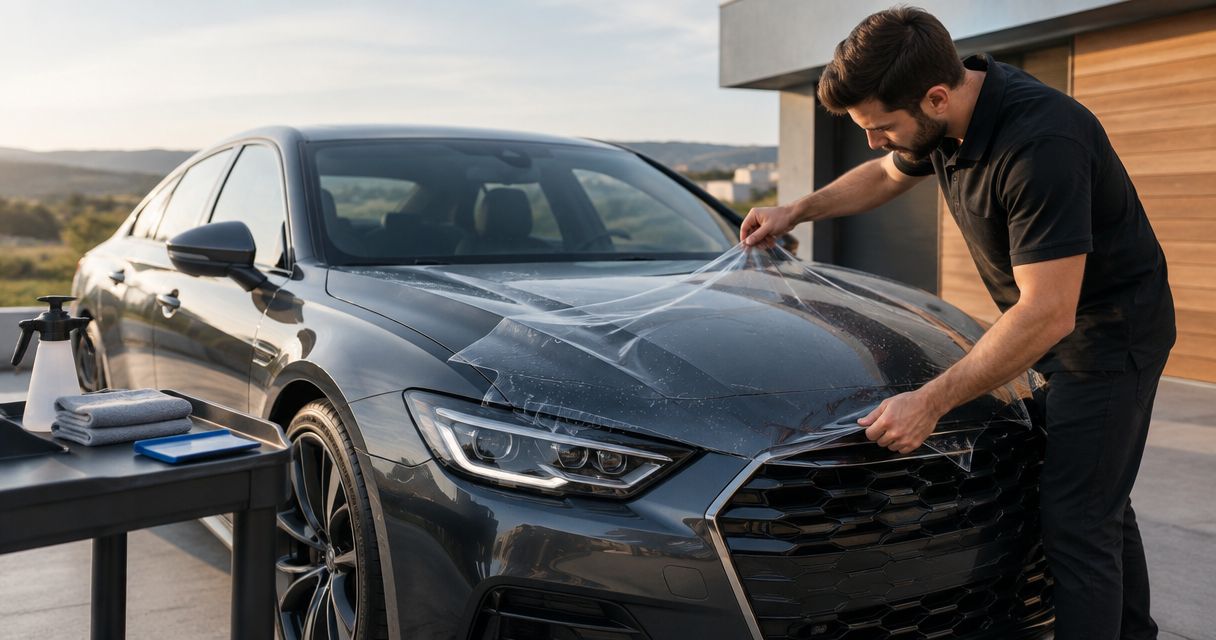
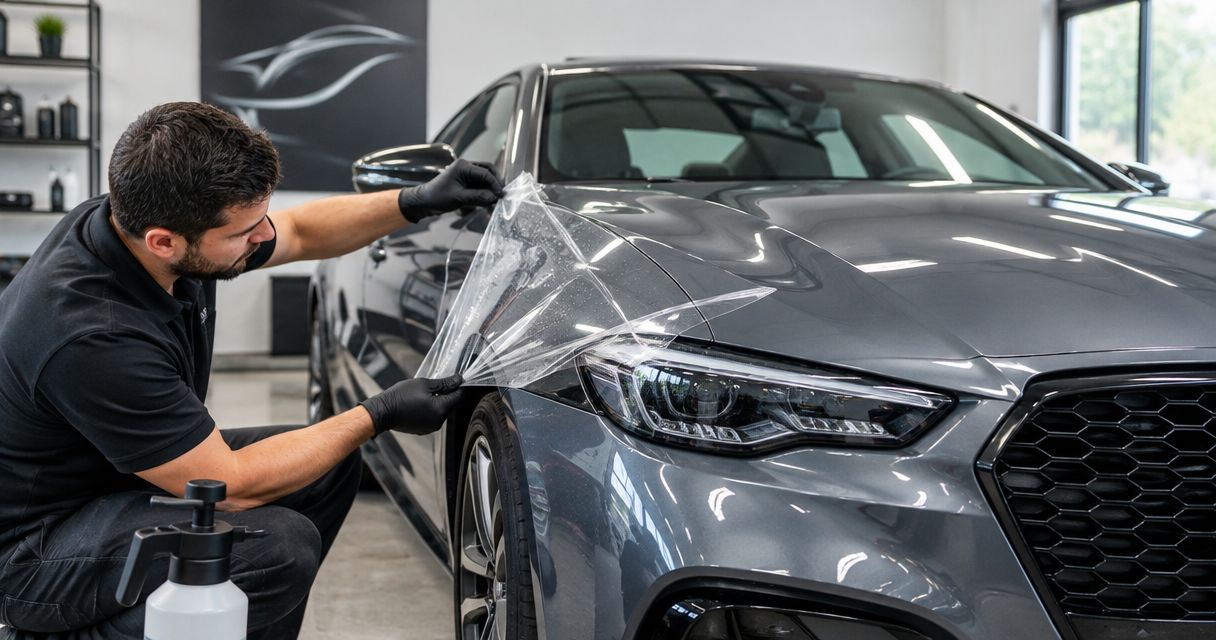
Paint protection film, or PPF, places a physical film over selected painted areas. Ceramic coating serves a different role: it changes surface behavior and can make routine cleaning easier when maintained correctly.
A combined scope suits owners concerned about both road-debris exposure and everyday upkeep. The film’s coverage matters as much as its presence; protection only applies where the film is installed.
Best for: Highway commuters who want physical protection on exposed areas alongside ceramic coating elsewhere or on compatible film.
Front-end PPF plus coating pros
- Uses film to address impact exposure rather than asking coating to do that job.
- Lets you prioritize selected areas instead of treating every panel identically.
- Combines different protection methods according to their roles.
- Creates an opportunity to plan film installation and coating compatibility together.
Front-end PPF plus coating cons
- Adds installation work beyond a coating-only scope.
- Leaves uncovered paint without the film’s physical barrier.
- Requires clear agreement on film coverage, edges, and coating compatibility.
What to request
Ask the installer to identify the exact panels and partial-panel areas receiving film. Do not assume that a front-end description includes every exposed surface.
Also ask whether the chosen coating is intended for the installed film. The combination should follow the relevant product instructions, not a blanket assumption that every coating suits every surface.
Verdict: Buy front-end PPF plus coating when stone-chip exposure is a priority. Skip the combination if your only goal is easier washing and you do not want film.
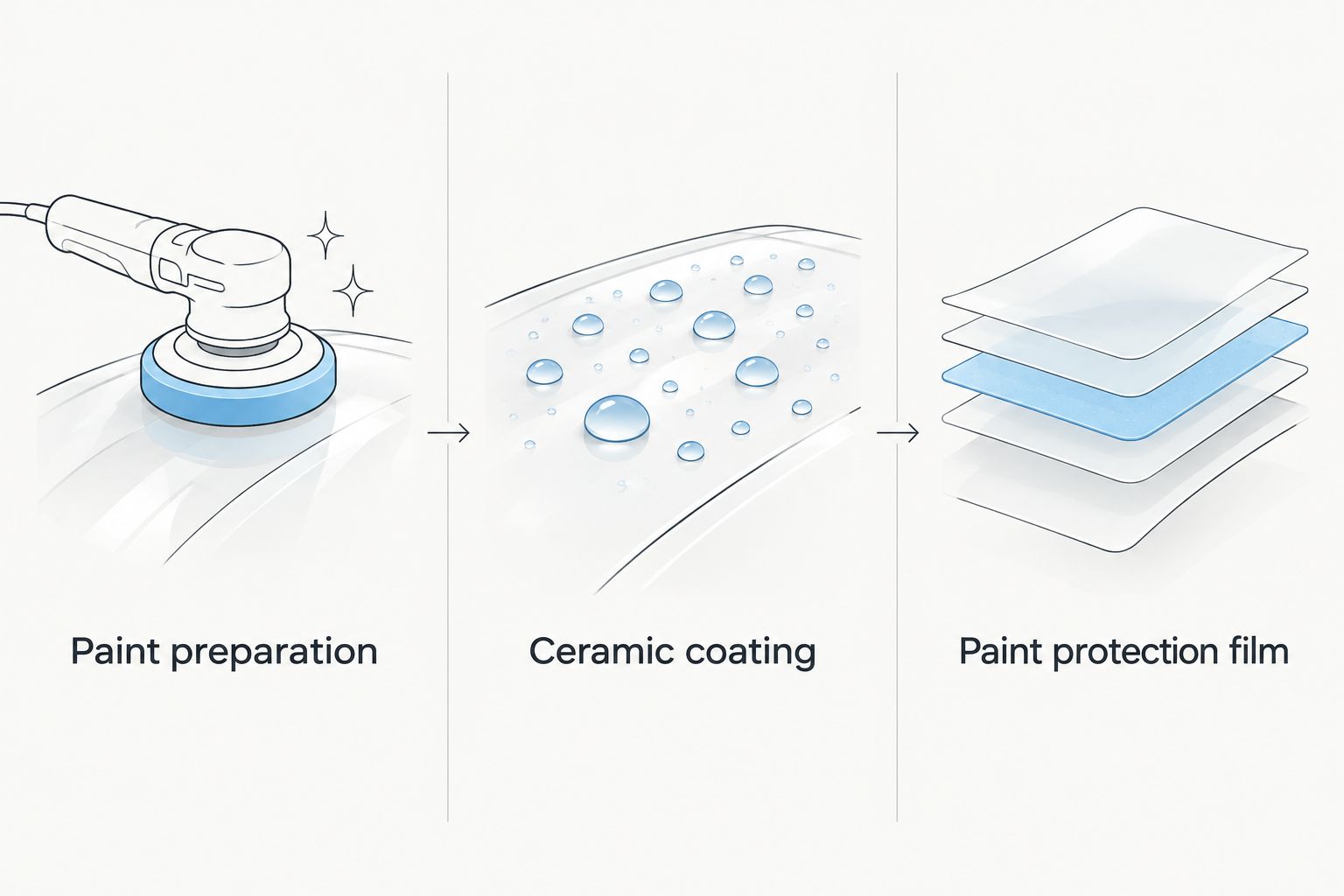
Coating and film have different jobs
In 2026, the useful distinction remains straightforward: Paint preparation improves the starting surface; ceramic coating supports surface protection and upkeep; paint protection film adds a physical barrier. None replaces careful maintenance.
4. DIY ceramic coating: best for experienced hands-on owners
DIY ceramic coating puts preparation, application, inspection, and curing in your hands. It suits an owner who already understands careful washing and surface preparation and can follow the chosen product’s directions.
This is not the default recommendation for someone looking for the least involvement. Uneven application can leave visible residue or high spots, and correcting an application problem can require additional work.
Best for: Detail-oriented owners with a suitable workspace and confidence in their preparation skills.
DIY ceramic coating pros
- Gives you control over the preparation and application sequence.
- Lets you inspect each panel as you work.
- Fits owners who already enjoy maintaining their own paint.
- Makes the product instructions part of your routine from the start.
DIY ceramic coating cons
- Makes you responsible for surface readiness and application errors.
- Requires suitable conditions and adherence to curing instructions.
- Does not remove the need for professional help with difficult paint defects.
What to check before starting
Read the full instructions before opening the coating. Confirm surface preparation, application technique, inspection requirements, and restrictions during curing.
Use 1 test panel to establish your application and inspection method before coating the remaining vehicle, where the product instructions allow it. Stop if the finish is uneven; continuing spreads the problem rather than solving it.
Verdict: Buy DIY ceramic coating when you have the skills and conditions to apply it correctly. Skip DIY when convenience is your main goal.
How these package scopes rank
The 2026 ranking prioritizes paint preparation, protection fit, application responsibility, and manageable aftercare. It does not rank coating brands by unsupported durability claims or treat a longer advertised term as proof of a better result.
Paint-prep professional coating leads because it addresses appearance before sealing in the result. Light-prep coating follows for paint that needs less work. PPF plus coating becomes the first choice when impact exposure dominates, while DIY depends on your ability to complete the installation.
Which ceramic coating package should you choose?
Choose professional coating with preparation matched to your paint unless a specific need points elsewhere. That means correction for defects you want addressed, lighter preparation for a finish you already like, and film when physical protection matters.
Use these 3 questions before approving a scope:
- What bothers you now: paint defects, difficult cleaning, or road-debris exposure?
- What preparation and protected surfaces are actually included?
- Can you follow the maintenance and curing instructions?
Supremeautonj provides ceramic coating and detailing for North Jersey daily drivers seeking professional vehicle care. Discuss paint condition first, then choose the protection work that fits your vehicle.
Discuss your vehicle’s protection needs
Match ceramic coating, paint preparation, and PPF to your daily driver.
Keep the coating useful after installation
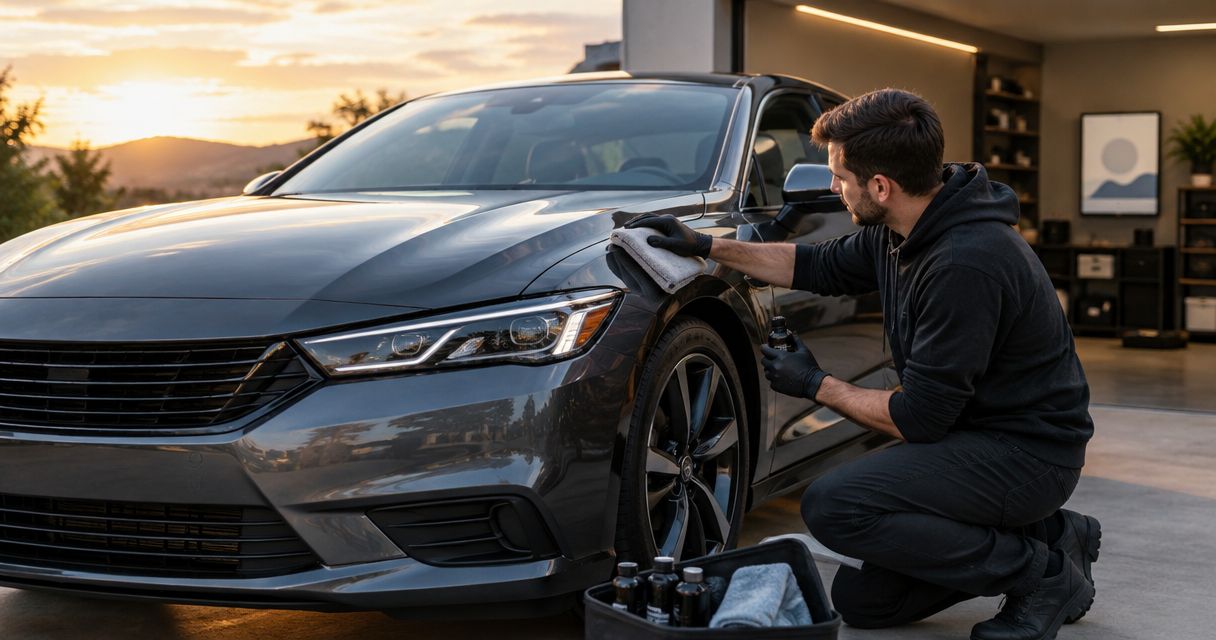
Your 2026 maintenance plan should be practical enough to follow. Remove bird droppings and other aggressive contamination promptly using suitable methods, and avoid dry-wiping dirty paint.
A 2-bucket wash method separates wash solution from rinse water, but it does not excuse using a dirty mitt. Clean tools, gentle technique, and thorough rinsing matter more than owning a particular setup.
Follow the coating manufacturer’s aftercare instructions. If water behavior changes, inspect for contamination before assuming the coating has failed or applying another product over it.
FAQ
What’s the best ceramic coating for daily driver use in 2026?
The best ceramic coating for daily driver use is a correctly applied coating over suitably prepared paint that you can maintain. Choose correction when visible defects need attention, lighter preparation when the paint is already satisfactory, and PPF when impact protection is the priority.
Does ceramic coating stop stone chips?
Ceramic coating does not replace paint protection film for stone-chip protection. PPF adds a physical barrier on covered areas, while coating primarily supports surface protection and easier upkeep.
Does a new car need polishing before ceramic coating?
A new car needs inspection before deciding whether polishing is necessary. Paint condition—not vehicle age—determines the appropriate correction work.
Is DIY ceramic coating better than professional application?
DIY ceramic coating is better suited to owners who can prepare the surface, control application conditions, and follow curing instructions. Professional application is the clearer choice when you want preparation and installation handled as a service.
Can I use an automatic car wash after ceramic coating?
Ceramic coating does not make abrasive washing harmless. Follow the coating’s aftercare instructions and avoid washing methods that drag dirty material across the paint.
Can ceramic coating go over paint protection film?
Ceramic coating can be applied over compatible paint protection film when the relevant product instructions permit it. Confirm compatibility and the installation sequence rather than assuming every combination works.
What should I ask Supremeautonj before choosing ceramic coating?
Ask Supremeautonj to explain the proposed paint preparation, correction, protected surfaces, and aftercare for your vehicle. Also discuss whether road-debris exposure makes paint protection film relevant to your daily driving.
One last thing
Inspect the result in more than flattering indoor lighting. Ask to view the paint from different angles and understand what marks remain, especially if correction formed part of the service.
For your 2026 daily driver, a clearly defined scope is more useful than a dramatic protection promise. Know what was prepared, what was protected, and what you must do next.