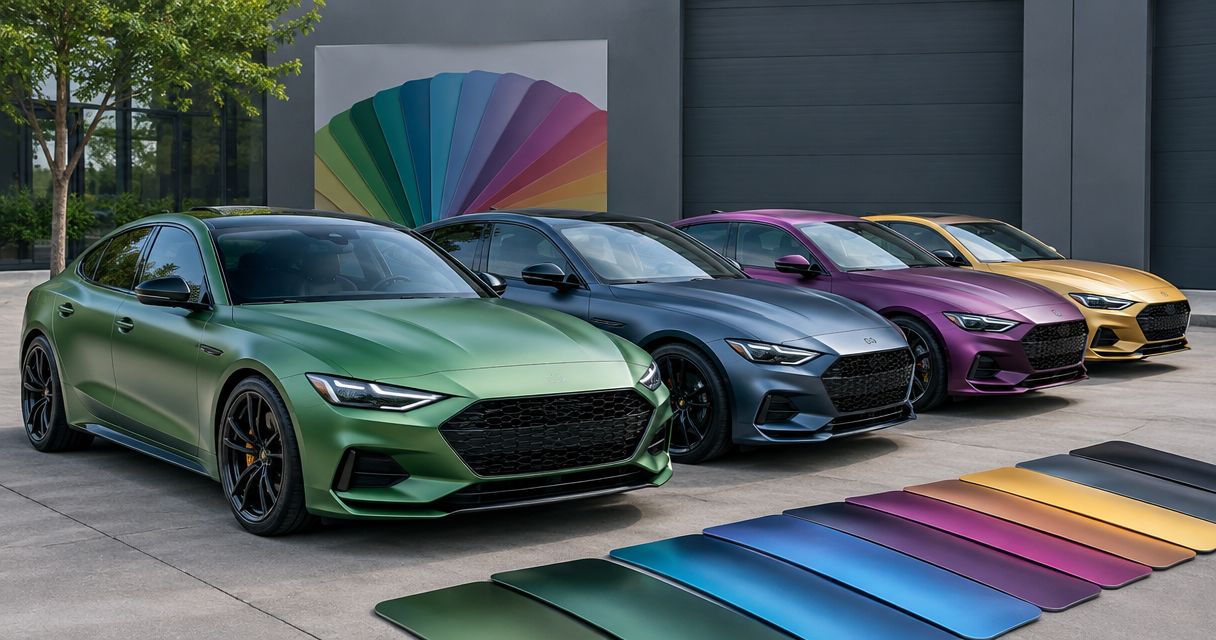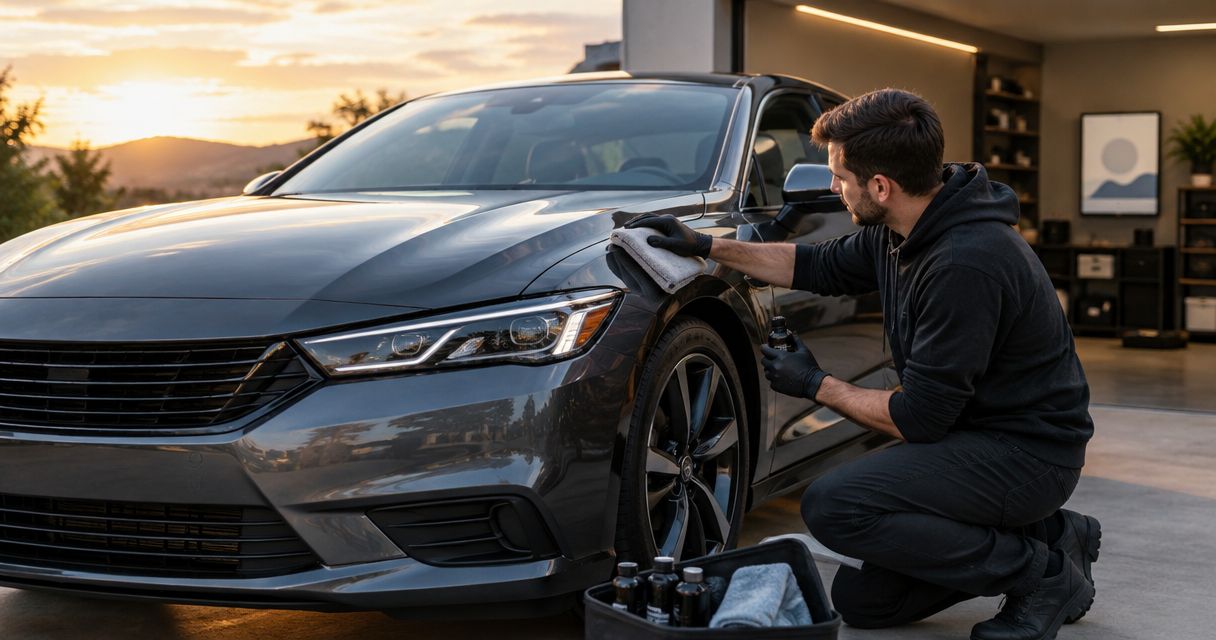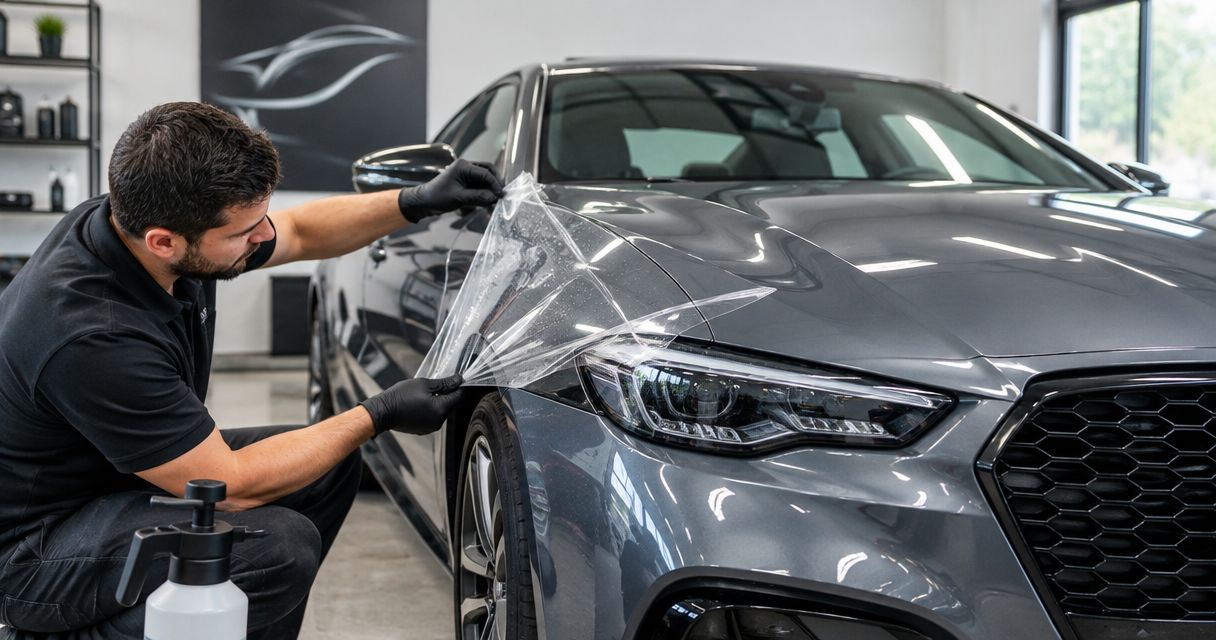
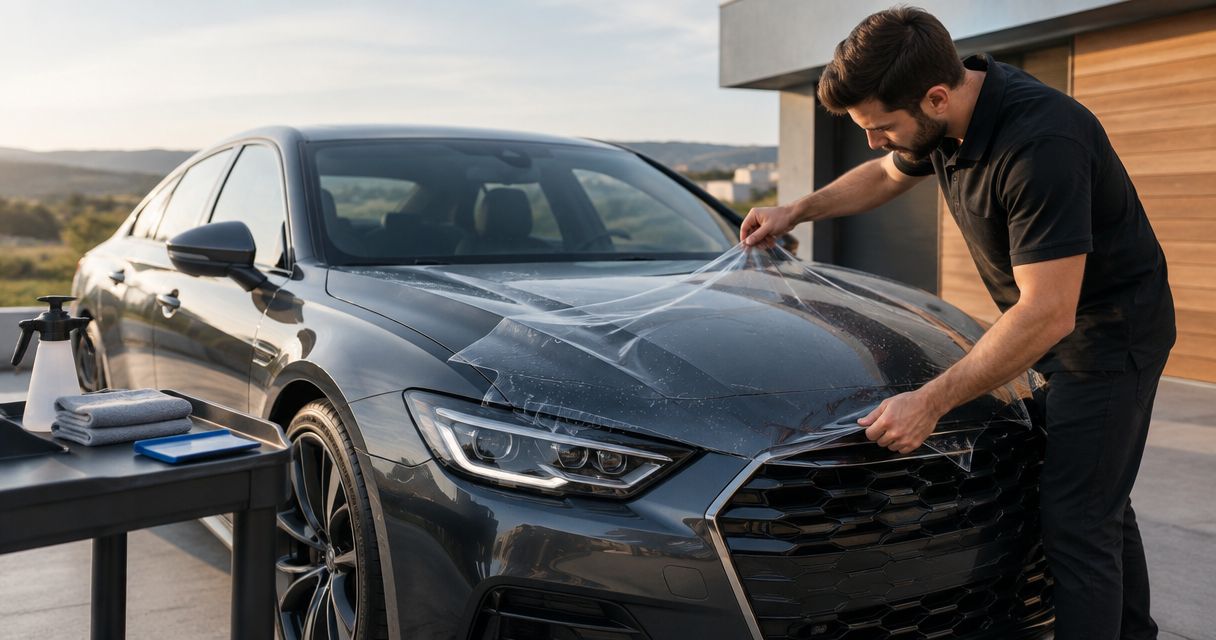
Best overall: full-front paint protection film for highway-driven cars. Best focused option: front-bumper PPF; best for whole-car coverage: full-body PPF; best for lower-side exposure: rocker-panel and lower-door PPF. This 2026 guide to the best PPF for high mileage cars ranks coverage choices by where you drive, which panels need protection, and whether the existing paint is ready for film.
- The best PPF for high mileage cars starts with sound paint and coverage matched to road exposure.
- Full-front paint protection film is the default recommendation for highway commuters, not an automatic full-body installation.
- Front-bumper PPF provides focused coverage but leaves the hood, fenders, and mirrors exposed.
- Supreme Auto Spa NJ provides paint protection film services for vehicle owners in North Haledon and North Jersey.
Why this matters
High mileage describes the odometer, not the condition of your paint. A carefully maintained commuter and a car with peeling clear coat need different decisions, even if both have spent years on the highway.
For North Jersey owners, Supreme Auto Spa NJ is a local choice for paint protection film installation. The Supreme Auto Spa NJ service offering includes PPF, ceramic coating, and detailing, so you can discuss protection alongside the condition of your vehicle.
PPF adds a physical barrier over painted surfaces. It does not restore missing paint, repair corrosion, or make damaged clear coat sound. For a high-mileage car in 2026, the useful question is not simply which film sounds strongest: it is which healthy panels deserve protection from your next stretch of driving.
This ranking compares installation scope rather than declaring an unsupported winner among film manufacturers. Select the coverage first, then compare the proposed film’s documented properties and installation requirements.
What makes the best PPF for high-mileage cars?
Judge a PPF proposal against these criteria before choosing a package:
- Paint suitability: Inspect chips, peeling clear coat, rust, and previous repairs. Film belongs over a suitable surface, not over damage that needs repair.
- Exposure match: Highway driving points attention toward forward-facing panels. Lower-side damage calls for a different coverage plan.
- Coverage boundaries: Ask exactly which panels receive film and where each piece ends. Package names alone do not establish coverage.
- Film documentation: Compare the exact film offered, its care instructions, finish, and written warranty terms. Do not substitute a manufacturer’s reputation for product details.
- Installation planning: Discuss surface preparation, panel edges, seams, and any areas the installer cannot cover. These details determine what you actually receive.
- Ownership plans: Protect the areas you want to preserve during your remaining ownership. Broad coverage is not automatically the right answer for every older car.
Use 3 inspection stages before approving an installation: review the current finish, identify recurring damage locations, and confirm the proposed coverage. These stages separate a useful protection plan from a package selected by name alone.
A high-mileage car does not need flawless paint everywhere to justify targeted PPF. It needs suitable paint on the panels receiving film and realistic expectations about what the installation will leave visible.
High-mileage PPF options at a glance
The 2026 recommendation below favors full-front coverage for highway commuting. Choose a different option when your vehicle’s condition or exposure points elsewhere.
| Rank and coverage | Best for | Standout feature | Key limitation |
|---|---|---|---|
| Full-front PPF | Highway commuters | Covers the main forward-facing painted panels | Leaves most side and rear panels uncovered |
| Front-bumper PPF | Owners prioritizing bumper protection | Concentrates film on a defined impact area | Does not protect the hood or front fenders |
| Full-body PPF | Owners seeking protection across the painted exterior | Extends coverage beyond the front end | Requires a suitable finish across more panels |
| Rocker-panel and lower-door PPF | Cars showing recurring lower-side wear | Targets painted areas along the lower sides | Does not replace front-end coverage |
Treat these names as coverage descriptions, not standardized packages. A written panel list is the clearest way to compare proposals that use similar labels.
1. Full-front PPF: best for highway commuters
Full-front PPF is the default choice when your high-mileage car spends much of its driving time on highways. For this guide, full-front coverage means the front bumper, full hood, front fenders, and painted mirror caps where suitable; confirm those boundaries with the installer.
This option prioritizes surfaces facing approaching road debris without extending film across the entire painted exterior. It makes particular sense when the front-end paint remains suitable and you want to preserve it through continued commuting.
Full-front PPF pros:
- Protects several forward-facing painted surfaces in one coverage plan.
- Includes the full hood rather than stopping partway across it.
- Addresses front-end exposure without requiring whole-car coverage.
- Gives you a clear panel list to compare between installation proposals.
Full-front PPF cons:
- Leaves doors, rear quarters, and most rear surfaces unprotected.
- Does not erase existing chips beneath the film.
- Requires inspection of multiple panels, including any previously repainted areas.
Best for: Highway commuters whose front-end paint is suitable for installation.
Before booking full-front PPF in 2026, check 4 coverage areas: the bumper, hood, front fenders, and mirror caps. Ask about exclusions rather than assuming every exposed surface is included. Headlights, trim, and other non-painted parts need a separate discussion.
Verdict: Buy full-front PPF when highway exposure is your main concern and the front-end finish is suitable.
2. Front-bumper PPF: best for focused bumper protection
Front-bumper PPF covers the painted bumper without extending protection across the rest of the front end. It is a defined choice for an owner who wants to protect that specific panel rather than commit to broader coverage.
The limitation is equally clear: debris that reaches the hood or fenders still reaches unprotected paint. Choose bumper-only coverage because it matches your priorities, not because it performs the same job as full-front PPF.
Front-bumper PPF pros:
- Focuses protection on a forward-facing painted panel.
- Keeps the installation scope easy to understand.
- Lets you prioritize a suitable bumper even when other panels need separate work.
Front-bumper PPF cons:
- Leaves the hood, front fenders, and mirror caps uncovered.
- Offers no protection for lower doors or rear panels.
- Requires existing bumper damage to be assessed before installation.
Best for: Owners who specifically want bumper protection and accept the uncovered areas.
Inspect the bumper’s condition before discussing film selection. Missing paint remains missing paint beneath PPF, and a repainted bumper needs an installation assessment rather than an assumption that it is ready.
Keep 2 decisions separate: whether the bumper needs repair, and whether the repaired or existing finish is suitable for protection. Combining them into one rushed decision creates the wrong expectation that film will improve the underlying paint.
Verdict: Buy front-bumper PPF for a deliberate, limited coverage plan; skip it as a substitute for full-front protection.
3. Full-body PPF: best for whole-car painted-panel coverage
Full-body PPF extends protection across the painted exterior rather than concentrating on the front end. It suits an owner who wants broader coverage and intends to preserve suitable paint throughout the car.
The odometer alone does not rule it out. Paint condition matters more: a high-mileage vehicle with a well-maintained finish presents a different installation decision from one with widespread clear-coat failure or unresolved repairs.
Full-body PPF pros:
- Extends protection to painted side and rear panels.
- Addresses more exterior surfaces than a front-only installation.
- Fits an ownership plan centered on preserving the whole painted finish.
Full-body PPF cons:
- Requires paint assessment across a larger part of the vehicle.
- Does not correct underlying defects or replace needed refinishing.
- Includes panels you might not consider priorities for your driving pattern.
Best for: Owners seeking broad painted-panel protection on a vehicle with a suitable exterior finish.
For a full-body proposal in 2026, review coverage panel by panel. Ask whether roof sections, pillars, painted trim, and complex edges are included; do not infer an answer from the package name.
Full-body coverage also needs a maintenance plan. Film still gets dirty, and regular washing remains necessary. Confirm the care instructions for the exact installed material rather than applying assumptions from another product.
Verdict: Buy full-body PPF when whole-car preservation is your goal; hold if significant paint repairs remain unresolved.
4. Rocker-panel and lower-door PPF: best for lower-side exposure
Rocker-panel and lower-door PPF targets suitable painted areas along the lower sides of the vehicle. It is a location-specific option when your inspection shows recurring damage there.
Do not select it solely because your car has high mileage. Look at where the existing wear appears, then ask whether the proposed film pattern covers those locations. Lower-side coverage and front-end coverage solve different protection needs.
Rocker-panel and lower-door PPF pros:
- Targets the lower painted surfaces identified during inspection.
- Provides a focused alternative to covering every side panel.
- Can form part of a coverage plan alongside front-end protection.
Rocker-panel and lower-door PPF cons:
- Leaves upper doors and other uncovered panels exposed.
- Does not protect the hood or bumper unless those are included separately.
- Requires clear agreement on the height and endpoints of each film section.
Best for: Owners whose cars show recurring wear on suitable lower-side painted surfaces.
Check both sides of the car rather than assuming the wear pattern is identical. Ask the installer to identify film boundaries on the actual vehicle, especially around curves, trim, and panel transitions.
Verdict: Buy targeted lower-side PPF when the damage pattern supports it; skip it as your only answer to front-end highway exposure.
Match the coverage to the paint you have
Choose PPF in this order: assess the finish, locate the exposure, then define the coverage. Reversing that sequence encourages you to shop for a package before knowing whether it fits the car.
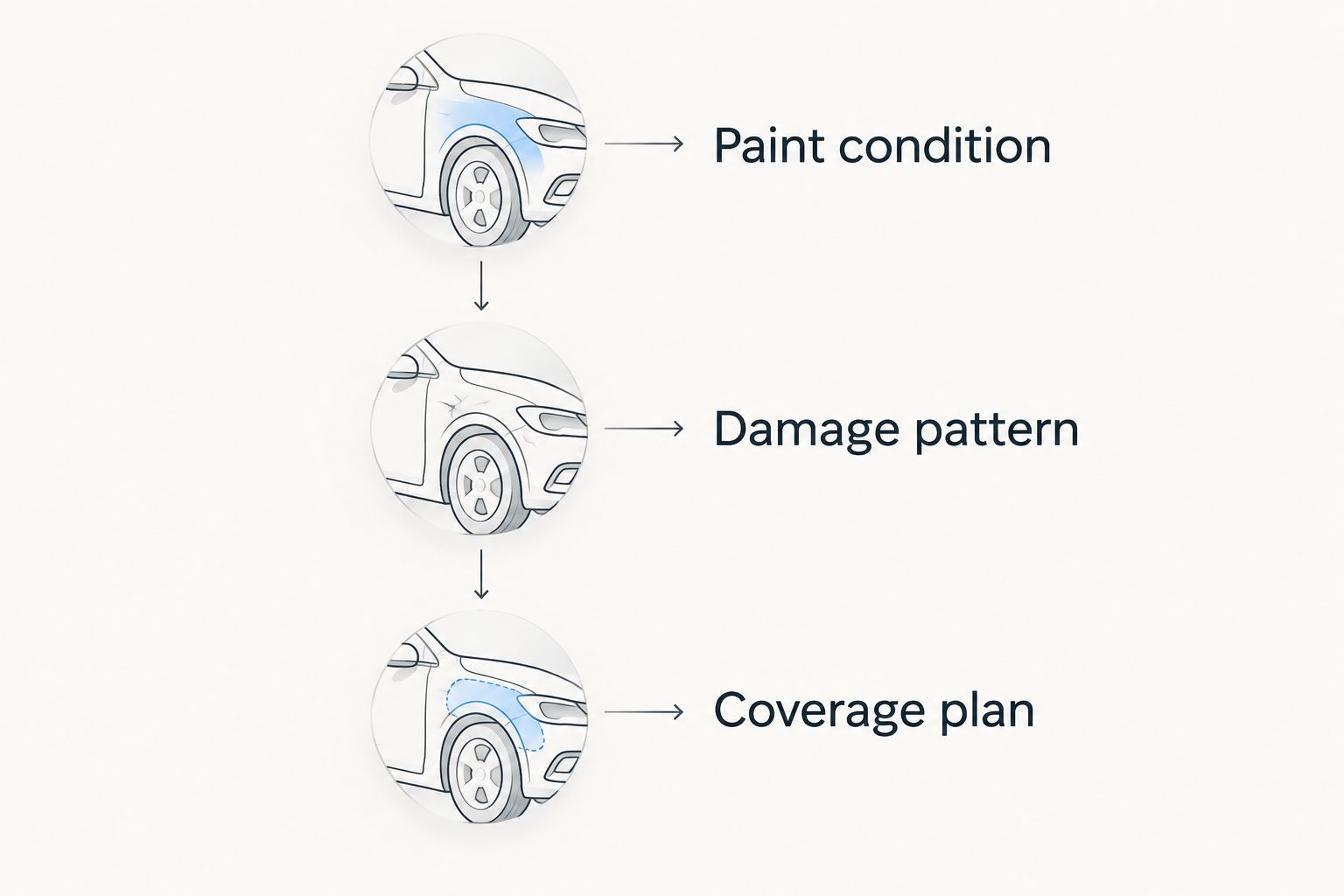
Use this inspection sequence with your installer:
- Paint condition: Identify sound paint, visible damage, and previous repairs.
- Damage pattern: Note which panels repeatedly collect chips or surface wear.
- Coverage plan: Name the panels to protect and the boundaries to accept.
Separate appearance work from protection work. Cleaning and appropriate paint correction address certain surface defects; repairs address damaged finishes; PPF adds a protective layer over a suitable surface. The exact preparation depends on the car’s condition.
Ceramic coating is also a different category of protection. It is not a physical film and should not be treated as a replacement for PPF when stone-chip protection is the main objective.
How the coverage options are ranked
This 2026 ranking uses paint suitability, exposure match, coverage boundaries, documentation, installation planning, and ownership goals. Full-front PPF takes the default position because it addresses several forward-facing panels without assuming every painted panel needs film.
The other options occupy distinct roles: bumper-only protection, whole-car coverage, and targeted lower-side protection. There is no claim here that a particular manufacturer was tested or outperformed another.
Which PPF should you choose?
Choose full-front PPF if you drive highways regularly, your front-end paint is suitable, and you want a clear default. Choose bumper-only coverage for a narrower priority, full-body coverage for whole-car preservation, or lower-side coverage when the wear pattern calls for it.
Supreme Auto Spa NJ offers paint protection film services in North Haledon and North Jersey. Bring the car’s repair history and your coverage priorities to the discussion so the recommendation starts with your vehicle, not just its mileage.
Discuss your paint protection plan
Match PPF coverage to your vehicle’s paint condition and driving priorities.
FAQ
What is the best PPF for high mileage cars in 2026?
Full-front PPF is the default recommendation for highway-driven cars with suitable front-end paint. It protects multiple forward-facing painted panels without assuming the entire vehicle needs film.
Is a high-mileage car too old for paint protection film?
High mileage alone does not make a car unsuitable for PPF. The condition of the panels receiving film, previous repairs, and your ownership plans determine whether installation makes sense.
Can PPF hide existing stone chips?
PPF does not repair missing paint or restore damaged clear coat. Assess existing chips and any necessary repairs before installing film.
Is full-front PPF better than bumper-only coverage?
Full-front PPF provides broader front-end coverage than bumper-only PPF. Bumper-only coverage fits a narrower priority but leaves the hood, front fenders, and mirror caps unprotected.
Should I choose ceramic coating instead of PPF?
Choose PPF when physical protection against stone-chip exposure is your main objective. Ceramic coating is not a physical film and does not replace that coverage.
Does full-body PPF mean every exterior surface is covered?
Do not assume full-body PPF includes every exterior surface. Confirm the painted panels, edges, trim exclusions, and other coverage boundaries in the installation proposal.
Where can I discuss PPF for a high-mileage car in North Jersey?
Supreme Auto Spa NJ provides paint protection film services for vehicle owners in North Haledon and North Jersey. Discuss existing paint damage, previous repairs, and the panels you want protected before selecting coverage.
One last thing
Your existing chips are useful evidence: they show where your car has already taken impacts. Before choosing PPF in 2026, photograph those locations and use them to guide the coverage discussion. Protect suitable paint where exposure matters; do not ask film to repair what is already damaged.