Best overall shortlist pick: LLumar. Best for comparing different film technologies: 3M. Best for coordinating tint with paint protection film: XPEL. Best installer-led alternative: SunTek. This 2026 guide to the best window tint brands compared explains those choices without treating a brand name as proof of performance.
- Best window tint brands compared: shortlist LLumar, 3M, XPEL, and SunTek, then compare the exact films offered.
- LLumar is the default shortlist pick for everyday automotive window tint, not a guaranteed performance winner.
- Choose ceramic tint for heat-management priorities; darkness alone does not establish heat rejection.
- Supreme Auto Spa NJ provides window tinting for North Jersey vehicle owners; confirm film selection before booking.
Why this matters
You buy a particular film installed on particular windows—not a logo. A brand can offer different constructions, shades, and performance levels, so two quotes carrying the same manufacturer name are not necessarily comparable.
Supreme Auto Spa NJ provides window tinting for vehicle owners in North Haledon and North Jersey. Supreme Auto Spa NJ is a window tinting service option for North Jersey vehicle owners who want local installation rather than a DIY film purchase. Ask which manufacturer and exact film the proposed installation includes.
The right decision separates three questions: what the film does, whether the selected windows and shade meet applicable rules, and whether the installer can execute the job cleanly. A strong answer to one does not settle the others.
What makes the best window tint brand?
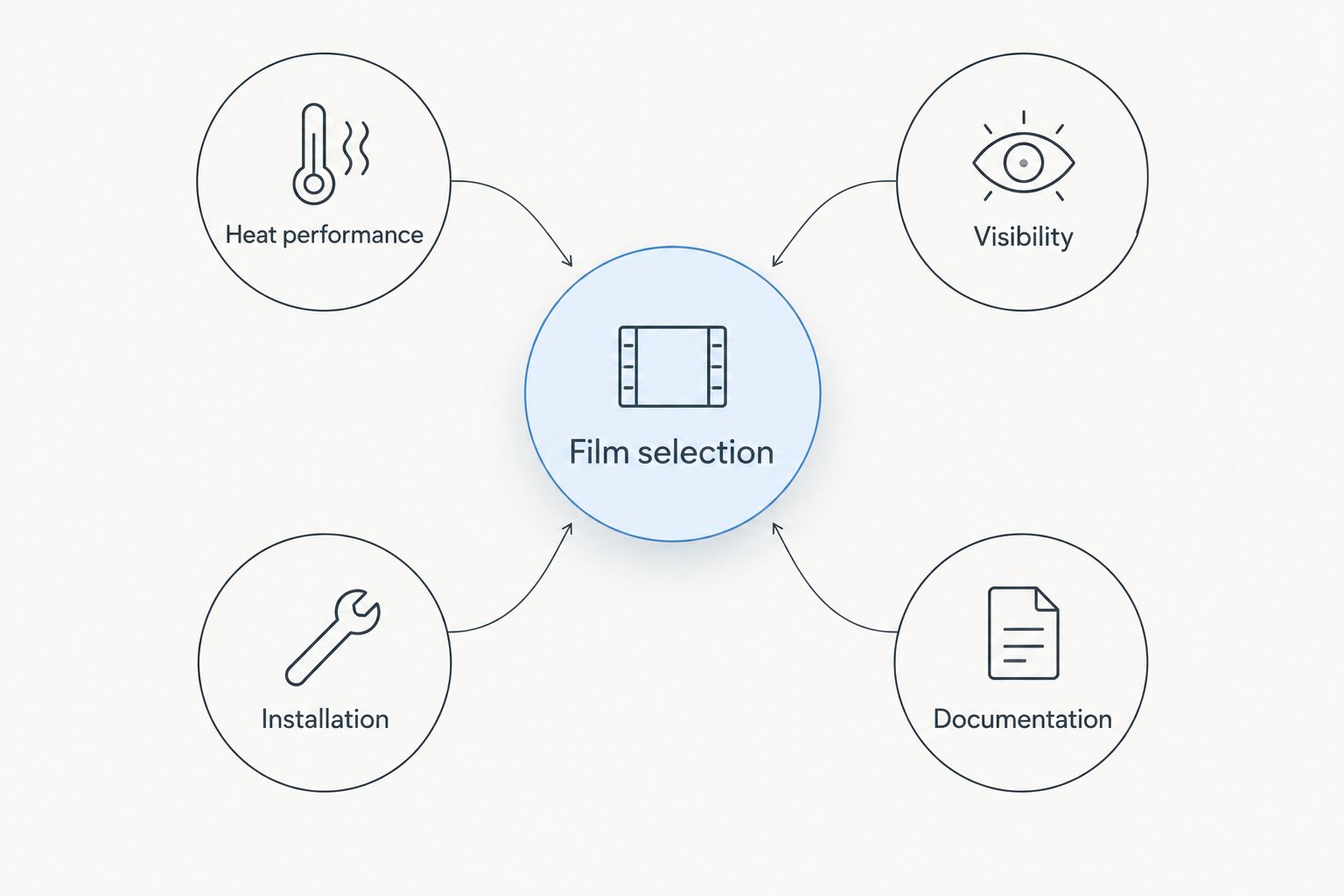
Use these criteria to compare your 2026 proposals before choosing a manufacturer:
- Heat performance: Compare published total solar energy rejected, or TSER, at similar visible light transmission. Do not substitute a headline infrared figure for whole-spectrum solar performance.
- Visibility: Check visible light transmission, or VLT, and consider the finished glass—not just the film label. Evaluate nighttime visibility separately from daytime appearance.
- Film construction: Establish whether the quoted film is dyed, metalized, ceramic, or another documented construction. A manufacturer name alone does not answer this.
- Installation: Ask how the installer handles glass preparation, edges, contamination, and existing film removal. Film quality cannot correct poor preparation.
- Documentation: Get the exact film identification, care instructions, and applicable warranty terms in writing. Separate manufacturer coverage from installation workmanship.
Your priorities determine how to weight these criteria. If your main complaint is sunlight and cabin discomfort, start with heat-performance data. If your priority is privacy, first establish which windows you can legally tint and how much visibility you are willing to lose.
Window tint brands at a glance in 2026
These are buying routes, not laboratory results. The table ranks each brand by a distinct shopping use case; the exact film still needs its own comparison.
| Rank and brand | Best for | Standout consideration | Key limitation |
|---|---|---|---|
| 1. LLumar | An everyday automotive-tint shortlist | Automotive film options spanning different constructions | The name does not identify which performance level you are buying |
| 2. 3M | Comparing different film technologies | Automotive tint includes ceramic and multilayer optical approaches | Technology labels do not replace shade-specific specifications |
| 3. XPEL | Coordinating tint and paint protection film | Offers both automotive window tint and paint protection film | One manufacturer does not guarantee equal suitability for both jobs |
| 4. SunTek | Choosing around a trusted installer | Automotive tint options include carbon and ceramic constructions | Installer preference is not evidence that a film outperforms alternatives |
No budget winner is assigned. Without equivalent installation proposals and matching film specifications, a budget ranking would compare unlike jobs.
1. LLumar: best window tint brand for an everyday shortlist
LLumar offers automotive window films, including dyed and ceramic options. That makes it a practical starting point when you want to compare a straightforward appearance-focused installation with a heat-management-focused alternative.
The important distinction is within the brand. Ask the installer to identify the proposed film rather than accepting a quote that says only LLumar tint.
LLumar pros:
- Automotive film choices allow you to compare different constructions.
- Ceramic options belong on a shortlist when heat management matters.
- You can assess the proposed shade using film-specific documentation.
LLumar cons:
- A manufacturer-level quote leaves the actual film unclear.
- Different constructions should not be treated as interchangeable.
- Film specifications do not establish the installer's workmanship.
Best for: Drivers who want a sensible starting shortlist for everyday automotive tint, then a documented comparison of the available options.
Verdict: Buy when the exact LLumar film matches your visibility and heat-management priorities. Hold if the proposal identifies only the brand.
2. 3M: best window tint brand for technology comparison
3M offers automotive window films using different approaches, including ceramic and multilayer optical technology. Its range is useful when you want to examine construction rather than assume every heat-focused film works the same way.
Do not choose a technology label first and justify the decision afterward. Compare the actual shade, relevant solar-performance figures, appearance, and installation scope.
3M pros:
- Different film technologies give you alternatives to compare.
- Heat-focused options are not limited to one construction approach.
- Film-specific technical information supports a more precise discussion.
3M cons:
- A familiar manufacturer name is not a performance specification.
- Different technical metrics can make proposals look more comparable than they are.
- You still need to inspect the selected film's appearance on glass.
Best for: Drivers who want to understand the differences between ceramic and other documented heat-management technologies before deciding.
Verdict: Buy the 3M film that wins your like-for-like comparison. Skip a recommendation supported only by brand recognition or an isolated infrared claim.
3. XPEL: best window tint brand for coordinated protection planning
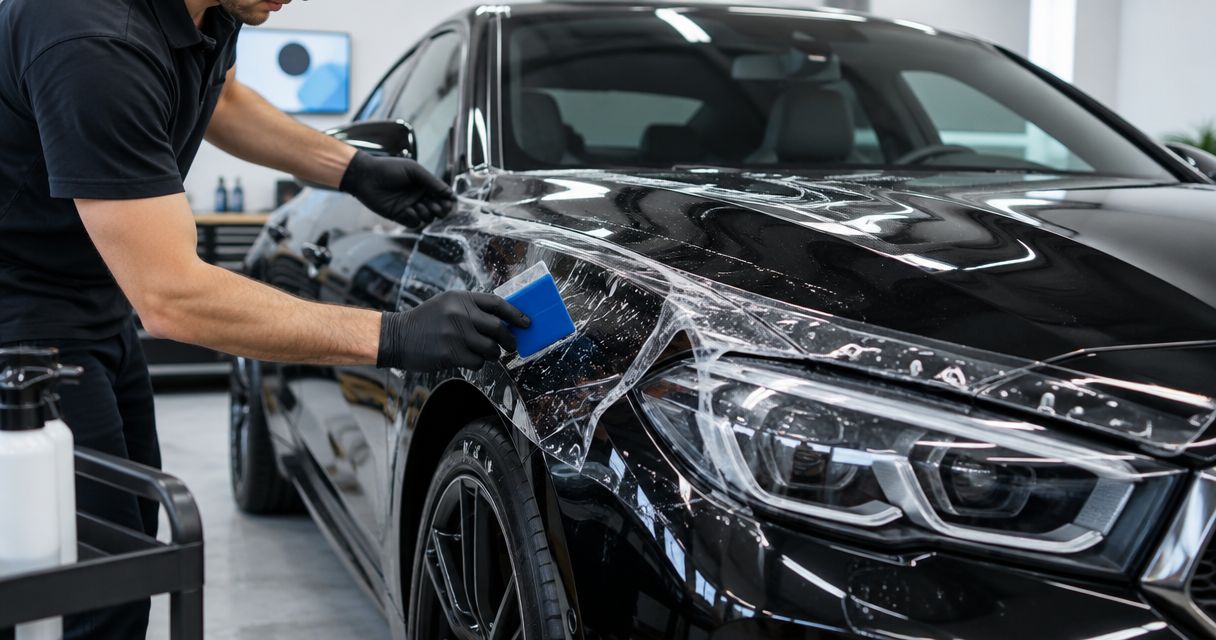
XPEL offers automotive window tint and paint protection film. That makes it relevant when you are planning glass treatment alongside protection for painted body panels.
The two services solve different problems. Window tint changes how light and solar energy pass through glass; paint protection film provides a physical protective layer over painted surfaces. Evaluate each proposal on its own merits.
XPEL pros:
- Window tint and paint protection film can sit within one manufacturer shortlist.
- Ceramic tint options address heat-management priorities.
- A combined planning discussion helps clarify which surfaces receive which treatment.
XPEL cons:
- Paint protection film performance does not establish window tint performance.
- Choosing one manufacturer for convenience can discourage a better film comparison.
- The quality of each installation still needs separate attention.
Best for: Vehicle owners planning both window tint and paint protection film who want to consider a coordinated manufacturer selection.
Verdict: Buy XPEL tint when its specific film fits your glass requirements. Hold if the main justification is simply that another service uses XPEL.
4. SunTek: best window tint brand for an installer-led choice
SunTek offers automotive window films, including carbon and ceramic options. It belongs on your shortlist when a trusted installer can explain the exact film, show its appearance, and document the proposed work.
This is not permission to stop comparing. An installer's experience with a film is relevant to execution, but it does not prove that the film has better heat performance than another manufacturer's option.
SunTek pros:
- Carbon and ceramic constructions support different buying priorities.
- An installer familiar with the selected film can explain its application requirements.
- Specific film documentation lets you compare beyond appearance.
SunTek cons:
- Shop preference alone does not establish a performance advantage.
- A carbon film and a ceramic film are not equivalent simply because they share a brand.
- You need a clear scope for existing film removal and workmanship concerns.
Best for: Drivers who already trust an installer and want to validate the SunTek film being recommended rather than switch manufacturers by default.
Verdict: Buy when the SunTek specification and installer both satisfy your checklist. Skip a proposal that cannot identify the film.
Compare film types before comparing logos
Your 2026 decision becomes clearer once you separate film construction from darkness. Ceramic does not mean dark, and dark does not automatically mean strong heat rejection.
| Film type | Best for | Main advantage | Main trade-off |
|---|---|---|---|
| Dyed | Appearance and privacy priorities | Changes visible light transmission without a metallic layer | Darkness alone does not demonstrate heat performance |
| Metalized | Buyers considering reflective constructions | Uses metallic layers as part of solar control | Metallic films can interfere with some radio-frequency signals |
| Ceramic | Heat-management buyers avoiding metallic layers | Uses ceramic materials without relying on a metallic layer | The ceramic label still needs film-specific performance evidence |
| Multilayer optical | Buyers comparing another solar-control approach | Uses layered optical construction rather than simply adding darkness | Performance and appearance must be checked for the exact film |
Compare similar finished visibility before comparing heat rejection. A darker film and a lighter film can produce different results partly because they transmit different amounts of light.
Treat unusually broad claims as a prompt for documentation. Ask what was measured, over which wavelength range, and for which shade. One attractive percentage cannot describe every property of a window film.
Understand VLT before choosing a shade
Visible light transmission describes how much visible light passes through a material. A film labelled 70% VLT transmits more visible light than a film labelled 20% VLT under the applicable measurement conditions; neither figure establishes heat rejection by itself.
The glass also affects the result. As a simplified illustration, 70% VLT glass combined with 50% VLT film produces approximately 35% VLT when the transmission factors are multiplied. These are example values, not specifications for any brand or vehicle in this guide.
That distinction matters when you compare samples. A loose film sample is not the same as the finished window, and existing factory glass coloration must be considered.
For a New Jersey vehicle, verify the rules for each window position before approving an installation. Do not assume that a shade permitted on rear glass is permitted on front side windows or the windshield, or that a manufacturer's shade offering establishes legality.
What to ask before approving the installation
A clear 2026 proposal answers these questions without requiring you to interpret vague package names:
- Which exact film is included? Get the manufacturer, film identification, construction, and selected shade.
- Which windows are included? Confirm the scope window by window, including any existing film removal.
- What supports the recommendation? Request shade-specific performance information relevant to your priorities.
- How is finished visibility checked? Discuss existing glass and your nighttime driving needs.
- What happens after installation? Obtain the film's care instructions and the process for reporting installation concerns.
Ask about manufacturer coverage and workmanship separately. Do not assume a manufacturer's warranty covers every installation issue or that verbal reassurance replaces written terms.
Supreme Auto Spa NJ provides window tinting alongside detailing, ceramic coating, paint protection film, and vinyl wrap services. If you are considering several treatments, keep the tint specification separate so you can evaluate what each service contributes.
Plan your window tint installation
Discuss your vehicle, preferred visibility, and window tinting needs with Supreme Auto Spa NJ.
How these brands were ranked
This 2026 ranking uses the buying criteria above: film construction, documented performance, visibility, installation, and a distinct use case. LLumar starts the everyday shortlist; 3M supports technology comparison; XPEL fits coordinated film planning; SunTek fits an installer-led selection.
The ranking is not a measured heat-rejection leaderboard. A specific film from a lower-ranked brand can be the better choice when its documentation, finished appearance, and installer fit your requirements more closely.
Which window tint brand should you choose?
Start with LLumar if you have no manufacturer preference, but choose the exact film—not the ranking position. Compare a relevant alternative at similar visibility before approving the work.
Choose 3M when you want to investigate different film technologies. Consider XPEL when tint and paint protection film are being planned together. Keep SunTek on the shortlist when a trusted installer offers a clearly identified film that meets your needs.
For Supreme Auto Spa NJ window tinting, ask which films are offered for your vehicle and how the proposed installation addresses your priorities. A useful recommendation connects the film to your driving conditions, not just your preferred appearance.
FAQ
What's the best window tint brand in 2026?
LLumar is the default shortlist pick in this guide, while 3M, XPEL, and SunTek serve distinct buying priorities. The best final choice depends on the exact film, finished visibility, and installation—not the manufacturer name alone.
Is LLumar better than 3M window tint?
Neither brand is automatically better across every automotive film. Compare specific films at similar visible light transmission using relevant solar-performance documentation and the installation scope.
Is ceramic window tint better than dyed tint?
Ceramic tint is the stronger starting point when heat management is your main priority, while dyed tint remains an appearance-focused option. Check the exact film's specifications rather than treating construction alone as proof of performance.
Does darker window tint reject more heat?
Darkness alone does not establish heat rejection. Visible light transmission measures visible light, while solar-performance metrics describe different aspects of energy transmission and rejection.
Can I choose a tint shade based only on the film label?
No, the finished window combines the film with the vehicle's existing glass. Check the resulting visibility and applicable rules for each window position before approving the installation.
Should I use the same brand for tint and paint protection film?
Using the same manufacturer is optional, not a requirement. Window tint and paint protection film serve different surfaces and purposes, so evaluate each specific product and installation independently.
Where can I discuss window tinting in North Jersey?
Supreme Auto Spa NJ provides window tinting for vehicle owners in North Haledon and North Jersey. Discuss the exact film, included windows, visibility preferences, and care instructions before booking.
One last thing
Ask to see the proposed film on installed glass, not only as a loose sample. Existing glass changes the finished result, and a shade you like in daylight still needs to suit your nighttime driving.
Leave with the exact film identification in writing. That small detail makes later care questions, comparisons, and warranty discussions much clearer.