Best overall: 35% VLT on rear windows only. Best for nighttime visibility: 50% rear tint. Best for rear-seat privacy: 20% rear tint. For the best window tint shade NJ legal rules allow in 2026, leave the windshield and front side windows untinted unless you have an approved medical exemption; choose rear-window darkness around how you actually drive.
- Best window tint shade NJ legal choice: 35% rear tint balances appearance and visibility; leave front windows untinted.
- Choose 50% rear tint for a lighter view, or 20% rear tint when rear-seat privacy matters more.
- New Jersey restricts windshield and front side-window tint under standard rules; rear-window shade follows different rules.
- Supreme Auto Spa NJ provides window tinting for vehicle owners in North Haledon and North Jersey.
Why this matters
A tint percentage describes light transmission, not legal permission. A film that belongs on a rear window does not become legal on a front side window because it looks light.
Supreme Auto Spa NJ provides window tinting for North Jersey vehicle owners seeking an in-shop service. Before arranging work through Supreme Auto Spa NJ, decide which windows you want treated and whether privacy, visibility, or heat control matters most.
This 2026 guide ranks shade configurations, not film brands. The percentages below are starting points for rear-window selection, not promises about the finished glass or certifications that every installation complies with New Jersey law.
What makes the best legal window tint shade?
Use these criteria before choosing a shade:
- Legal placement: Keep aftermarket tint off the windshield and front side windows under standard New Jersey rules. An approved medical exemption is a separate process.
- Nighttime visibility: Judge the rearward view in darkness, not just the appearance outside a brightly lit shop.
- Existing glass: Factory privacy glass already reduces light transmission. Added film makes the combined result darker.
- Privacy needs: Rear-seat privacy and a light interior view pull the choice in different directions.
- Heat performance: Compare documented film performance rather than assuming the darkest shade rejects the most heat.
- Maintenance: Choose a setup you can clean correctly and inspect without damaged edges or obstructed sightlines.
The New Jersey rule that controls the choice
New Jersey Motor Vehicle Commission guidance and N.J.S.A. 39:3-75 are the starting points for this 2026 comparison. Under standard rules, aftermarket tint is not permitted on the windshield or front side windows; rear side windows and the rear windshield can be tinted.
New Jersey does not set a standard numeric VLT minimum for those rear windows. That distinction explains why a rear-only shade recommendation makes sense, while a single percentage for every window does not.
Do not treat a nearly clear front-window film as automatically legal. Clear-looking film is still an aftermarket application. If you need front-window treatment for a medical reason, follow the MVC exemption process before installation rather than assuming a doctor's note alone authorizes it.
Legal rear-window shades at a glance
VLT means visible light transmission. A lower percentage means less visible light passes through: 20% VLT is darker than 35% VLT, and 35% is darker than 50%.
| Ranked configuration | Best for | Standout feature | Key limitation |
|---|---|---|---|
| 35% rear-only tint | Balanced daily driving | A middle-ground rear shade | Less privacy than darker options |
| 50% rear-only tint | Nighttime rearward visibility | A lighter view through rear glass | Limited privacy in bright conditions |
| 20% rear-only tint | Rear-seat privacy | A darker rear-window appearance | Reduced visibility through rear glass |
| Factory glass without added film | Minimal intervention | Preserves the existing glass setup | No added film benefits |
| 5% rear-only tint | Maximum darkness among these options | The darkest listed rear shade | The largest visibility compromise |
Every configuration keeps the windshield and front side windows free of added tint under standard rules. These are selected shade options, not measured results from a vehicle test.
Film percentage is not finished-window percentage
A film label describes the film, not necessarily the glass-and-film combination. Light must pass through both layers, so adding a film to already-dark glass reduces transmission further.
Ask for the existing glass to be measured and the intended finished result to be explained. This matters especially on SUVs and other vehicles with factory rear privacy glass: selecting film solely by its label can produce a darker result than you intended.
1. 35% rear-only tint: best for balanced daily driving
35% rear-only tint is the default choice for a driver who wants a darker rear section without immediately choosing a very dark shade. It sits between the lighter 50% option and the darker 20% option in this comparison.
The appeal is balance, not a special legal status. In New Jersey, rear placement makes this configuration relevant; 35% does not authorize front side-window tint.
35% rear-only tint pros
- Gives rear glass a darker appearance than a comparable 50% film.
- Transmits more visible light than a comparable 20% film.
- Provides a practical starting point when privacy and rearward visibility both matter.
35% rear-only tint cons
- Does not conceal the rear cabin as strongly as darker shades.
- Can become substantially darker when applied over factory privacy glass.
Best for: Daily drivers who want a middle-ground rear shade and do not need the darkest appearance.
For your 2026 installation, compare the sample against your own rear glass. Looking through a loose film sample against daylight does not reproduce the view through a finished window at night.
Verdict: Buy for a balanced rear-only setup after checking the existing glass.
2. 50% rear-only tint: best for nighttime visibility
50% rear-only tint wins when a lighter rearward view matters more than strong privacy. Among the added-film choices here, it has the highest stated visible light transmission.
Choose this direction if you regularly reverse in dim areas or depend on direct views through the rear side windows. A lighter shade still changes the glass; it does not guarantee an unobstructed view in every condition.
50% rear-only tint pros
- Transmits more visible light than the darker listed films.
- Creates a lighter rear-window appearance.
- Leaves shade selection focused on visibility rather than maximum concealment.
50% rear-only tint cons
- Provides less privacy than 35%, 20%, or 5% film under comparable conditions.
- Can disappoint drivers who expect a distinctly dark exterior look.
Best for: Drivers who prioritize seeing through rear glass during nighttime use.
Ask about heat rejection separately. A lighter film and a darker film can differ in construction, so darkness alone does not establish which one controls heat better. Compare the documented performance of the actual films offered.
Verdict: Buy when rearward visibility outranks a dark appearance.
3. 20% rear-only tint: best for rear-seat privacy
20% rear-only tint is the stronger privacy choice without selecting the darkest option in this list. It transmits less visible light than 35% or 50% film, giving the rear section a darker appearance under comparable conditions.
Privacy is not absolute. Brightness inside and outside the vehicle affects what someone can see, so a dark window should never be treated as secure storage for valuables.
20% rear-only tint pros
- Gives the rear cabin more visual separation than the lighter listed shades.
- Produces a darker exterior appearance.
- Leaves 5% as a still-darker option rather than making maximum darkness the default.
20% rear-only tint cons
- Reduces the light available for looking through rear glass at night.
- Can create an unexpectedly dark result over existing privacy glass.
Best for: Owners who put rear-seat privacy ahead of a lighter rearward view.
For a 2026 daily-driver setup, make this choice after considering your parking environment. A vehicle that routinely reverses near pedestrians or unlit obstacles needs a shade decision based on the driver's view, not a photograph of the exterior.
Verdict: Buy for rear privacy; hold if nighttime visibility is already difficult.
4. Factory glass: best for minimal intervention
Keeping factory glass without added film is the simplest option when the existing rear appearance already meets your needs. There is no reason to add darkness merely because a tint installation is available.
Factory privacy glass and aftermarket film are different things. Dark factory glass does not establish the performance of an added film, and its appearance alone does not tell you which additional treatment is appropriate.
Factory glass pros
- Preserves your current view through the windows.
- Avoids adding another layer that reduces visible light transmission.
- Lets you assess a specific problem before selecting a treatment.
Factory glass cons
- Adds no film-based heat-control or other film benefits.
- Leaves the existing rear-window privacy and appearance unchanged.
Best for: Owners satisfied with their current rear shade who have no clearly defined reason to change it.
If heat is your concern, assess film performance rather than adding the same dark shade across every rear window. The window tint films ranked by heat rejection guide addresses that separate selection question.
Verdict: Hold on added tint until you identify what the existing glass fails to do.
5. 5% rear-only tint: best for maximum rear darkness
5% rear-only tint is the darkest option here, not the best default for a daily driver. Its low visible light transmission creates the strongest darkness of these listed films under comparable conditions.
The trade-off is direct: less light reaches your eyes through the treated glass. Rear-window permission under New Jersey rules does not remove that visibility cost.
5% rear-only tint pros
- Produces the darkest rear appearance among these choices.
- Gives stronger visual concealment than the lighter listed films under comparable lighting.
- Suits owners whose specific priority is very dark rear glass.
5% rear-only tint cons
- Makes direct viewing through rear glass harder in low light.
- Adds further darkness when installed over factory privacy glass.
- Does not replace safe observation, compliant mirrors, or careful reversing.
Best for: Owners who specifically want maximum rear darkness and understand the visibility compromise.
Do not select 5% because a photograph makes it look cleaner. Your parking routine, existing glass, and ability to see outside are more important than matching someone else's vehicle.
Verdict: Skip as the default daily-driver choice.
How the shades were ranked
The order prioritizes legal placement, then the trade-off between rearward visibility and privacy. It does not rank film manufacturers, installation quality, or measured heat rejection.
35% leads as a middle-ground recommendation. The lighter 50% option owns the visibility slot; 20% owns the privacy slot; unchanged factory glass owns minimal intervention. The 5% option comes last because maximum darkness is a specific preference with a clear visibility cost.
Before you choose a rear shade
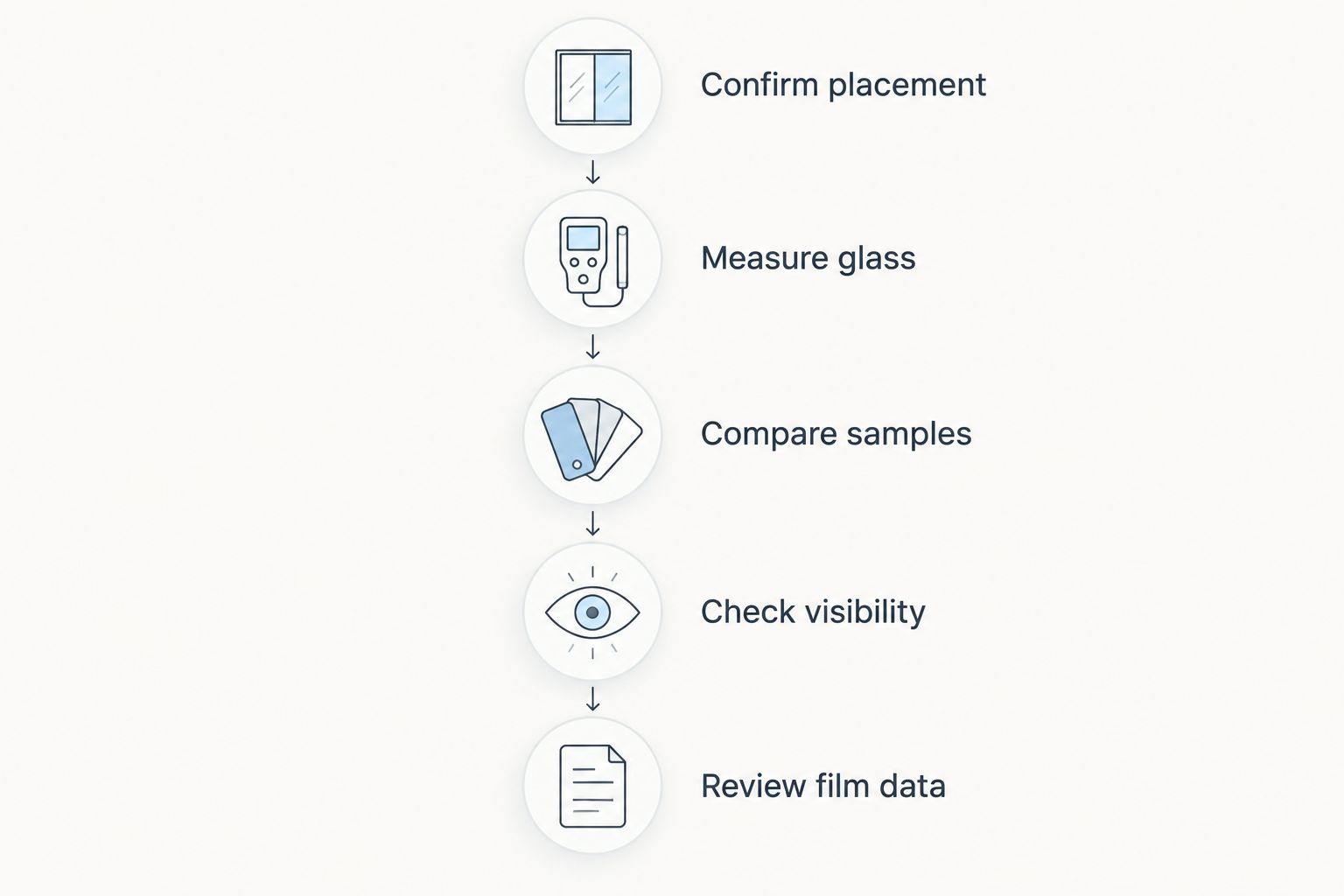
Use this sequence with Supreme Auto Spa NJ window tinting or any installer you consider:
- Confirm placement: Identify the rear windows to treat; keep standard front-window restrictions separate.
- Measure glass: Establish how much light the existing rear glass transmits.
- Compare samples: Evaluate lighter and darker choices on the vehicle, not only on a display.
- Check visibility: Consider nighttime reversing and direct views through rear side glass.
- Review film data: Compare documented heat performance and care instructions for the actual film.
The point is to choose the finished-window result. Selecting a film percentage first and discovering the combined darkness afterward reverses that process.
Which legal window tint shade should you choose?
Choose 35% rear-only tint if you are undecided. Choose 50% if nighttime visibility comes first, and 20% if rear-seat privacy comes first. Keep the factory setup when it already works; do not make 5% the automatic upgrade.
For a 2026 appointment with Supreme Auto Spa NJ, describe your driving conditions and existing rear glass before requesting a percentage. That gives the shade discussion a useful starting point without assuming every vehicle needs the same treatment.
FAQ
What's the best window tint shade NJ legal rules allow in 2026?
35% rear-only tint is the default recommendation for balancing appearance and visibility. Under standard New Jersey rules, leave the windshield and front side windows untinted; the rear shade recommendation does not authorize front tint.
Is 35% tint legal on front windows in New Jersey?
No, 35% aftermarket tint is not permitted on front side windows under standard New Jersey rules. An approved medical exemption is a separate authorization process.
Is 20% tint legal on rear windows in New Jersey?
New Jersey permits rear-window tint and does not set a standard numeric rear VLT minimum. A 20% rear shade still reduces nighttime visibility, and the completed vehicle must meet applicable equipment requirements.
Is 50% tint better than 35% tint for driving at night?
50% film transmits more visible light than 35% film under comparable conditions. That makes it the lighter rear-window choice, but existing glass and lighting affect the finished view.
Can I put clear ceramic tint on my front windows in New Jersey?
Do not assume clear ceramic film is legal on New Jersey front windows. Standard restrictions concern aftermarket applications, not just visibly dark shades; follow the MVC medical-exemption process if applicable.
Does factory privacy glass change the tint percentage I should choose?
Yes, factory privacy glass reduces the light transmission of the finished glass-and-film combination. Measure the existing glass before choosing added film, especially when you want to preserve nighttime visibility.
Does darker window tint always reject more heat?
No, darkness alone does not establish a film's heat-rejection performance. Compare documented specifications for the actual films rather than selecting solely by VLT.
One last thing
Tint is not one uniform percentage across a vehicle. Rear side windows and the rear windshield can start with different glass, so applying the same film does not guarantee the same finished light transmission.
Ask for each treated window to be considered individually. A consistent-looking result should never come at the expense of a rearward view you need to drive safely.