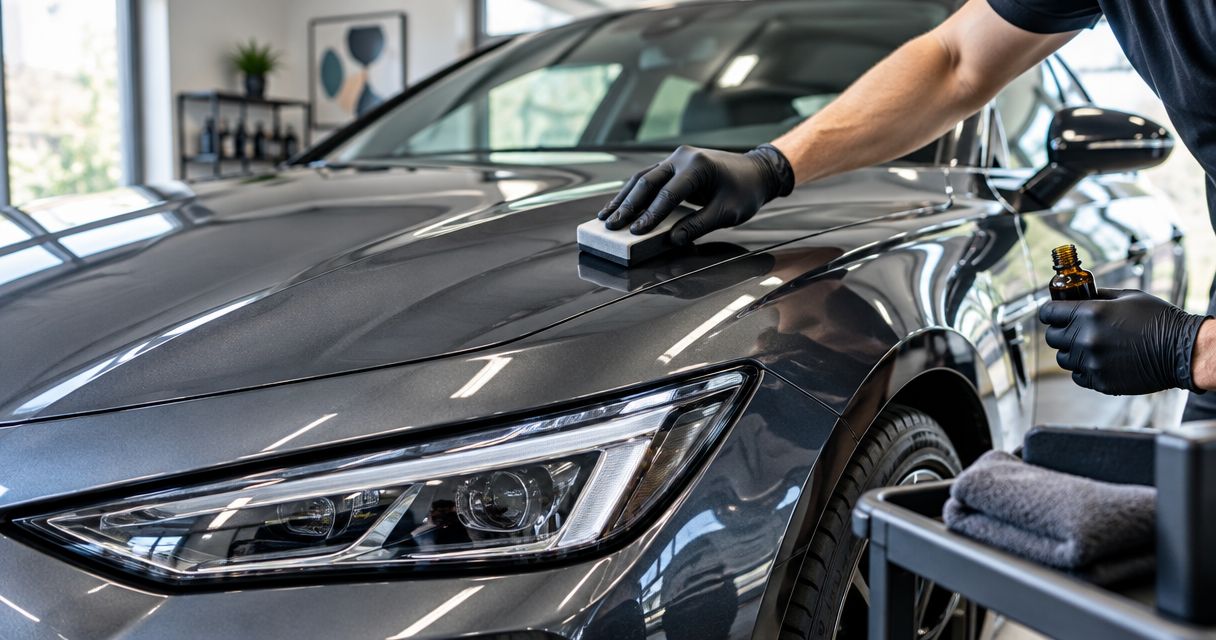
Best overall: professional ceramic coating with paint inspection and appropriate preparation. Best for stone-chip protection: paint protection film plus a compatible coating. Best for hands-on owners: a DIY ceramic coating. This 2026 guide compares protection approaches, not unverified product claims; Supremeautonj provides ceramic coating and paint protection services for vehicle owners in North Haledon and North Jersey.
- The best ceramic coating for new car protection starts with paint preparation, not a durability claim.
- Choose Supremeautonj for professional ceramic coating in North Jersey rather than a DIY application.
- Paint protection film addresses stone chips; ceramic coating helps with cleaning and surface maintenance.
- Choose DIY ceramic coating only when you can follow its preparation, application, and curing instructions.
Why this matters
New paint and clean paint are not the same thing. A recently delivered car can have transport contamination, residue, or marks from washing. Applying a coating does not remove those problems.
Your first decision is what you want protection to do. Easier washing, protection against stone impacts, and hiding existing scratches are different jobs. Ceramic coating is not a substitute for paint protection film or paint correction.
For a new car in 2026, separate 2 decisions: the condition of the paint and the protection applied over it. Inspect the finish first. Then choose the approach that fits your driving and maintenance habits.
What makes the best ceramic coating for a new car?
Judge a coating by the complete installation and maintenance plan, not just the bottle or a promised lifespan. These criteria apply whether you book a service or work in your garage:
- Paint preparation: Inspect, clean, and decontaminate the surface before application. Polish only when the condition of the paint calls for it.
- Application control: Follow the coating's requirements for surface condition, working environment, application, and curing.
- Protection fit: Choose coating for easier maintenance; add film where physical protection from road debris is the priority.
- Maintenance clarity: Get specific washing and aftercare instructions. A coated car still needs cleaning.
- Finish quality: Check for missed areas, residue, and uneven application under suitable lighting.
- Defined coverage: Confirm which surfaces are included. Painted panels, glass, wheels, and trim do not automatically belong in the same treatment.
In 2026, a clear explanation of preparation and aftercare is more useful than an unexplained durability label. Ask what happens to your actual vehicle, not what a generic package promises.
Ceramic coating options at a glance
These 4 options serve different owners. The order reflects a default choice for a new car, followed by alternatives for impact protection, hands-on application, and simpler maintenance.
| Option | Best for | Standout feature | Key limitation |
|---|---|---|---|
| Professional coating | Owners who want application handled for them | Professional installation with an agreed preparation scope | Service scope and aftercare need confirmation |
| PPF plus coating | Owners prioritizing stone-chip protection | Physical film protection combined with coating maintenance benefits | Film and coating must be compatible |
| DIY coating | Owners comfortable with careful preparation | Direct control over the application process | Application errors become your responsibility |
| Ceramic spray | Owners prioritizing simpler surface maintenance | A maintenance-focused application approach | Not equivalent to every dedicated coating system |
Paint protection starts with the problem you want to solve. Professional coating, PPF plus coating, DIY coating, and ceramic spray are approaches, not interchangeable versions of the same treatment.
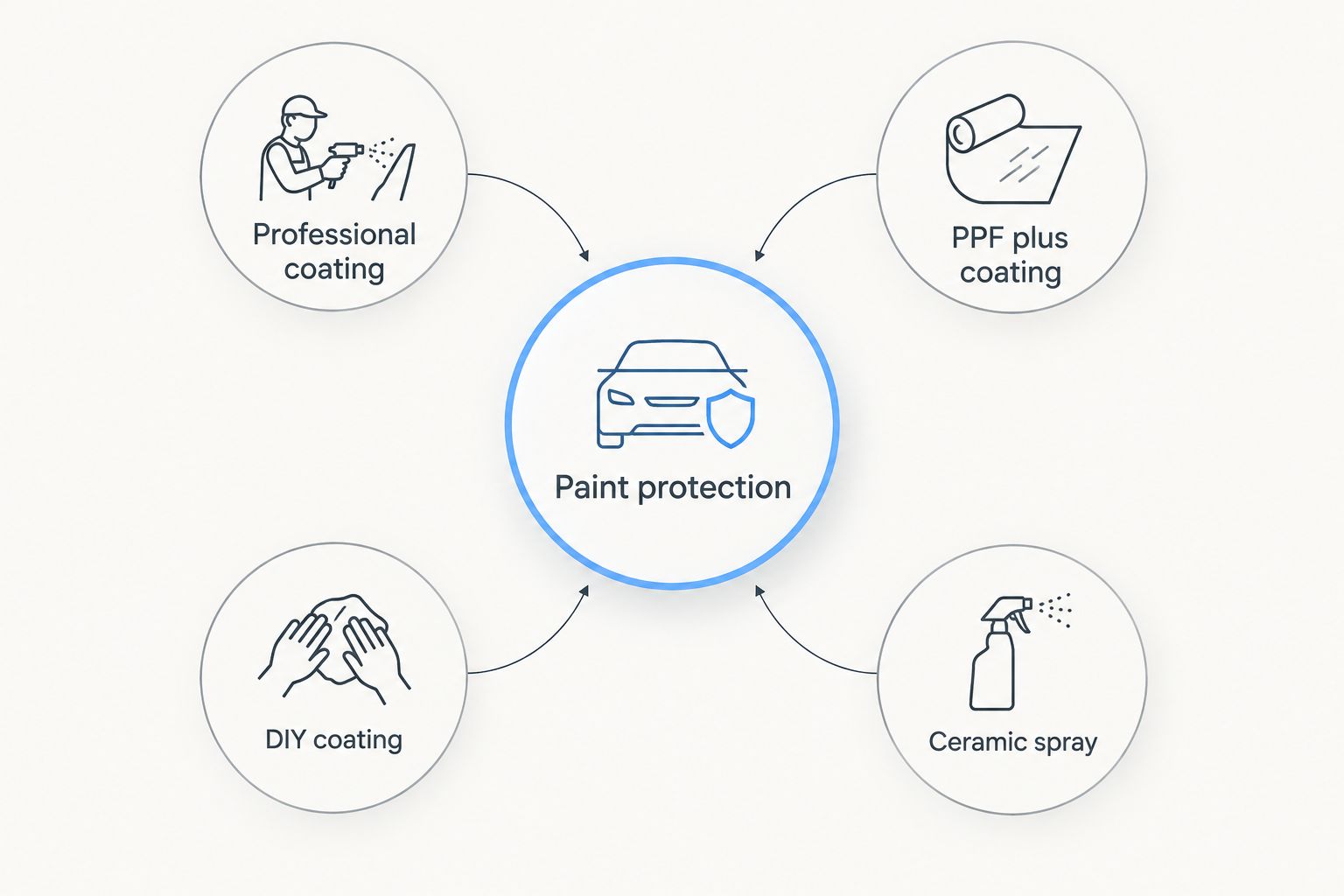
1. Professional coating: best for owners who want expert application
A professional ceramic coating service puts the application process in someone else's hands. The useful distinction is not simply professional versus consumer labeling; it is whether the installer explains the paint preparation, application, and aftercare your car requires.
Supremeautonj provides ceramic coating services in North Haledon and North Jersey. For a new vehicle, discuss the condition of the finish before agreeing to polishing or coating. New-car status alone does not establish which preparation steps are necessary.
Professional coating pros:
- You do not need to handle the coating application yourself.
- You can discuss paint condition and protection goals before choosing the work.
- You can request a defined preparation and surface-coverage scope.
- You can ask the installer to explain washing and aftercare requirements.
Professional coating cons:
- The service description needs scrutiny; coating names alone do not explain preparation.
- You still need to follow the specified curing and washing instructions.
- Ceramic coating does not provide the physical barrier of paint protection film.
Best for: New-car owners who want professional application rather than learning the process on their vehicle.
Before booking professional coating, ask 3 questions: What preparation does this paint need? Which surfaces are included? What aftercare instructions will I receive? Those answers make different proposals easier to compare.
Verdict: Buy professional coating when you want the application handled for you and the preparation scope is clear.
2. PPF plus coating: best for new cars exposed to road debris
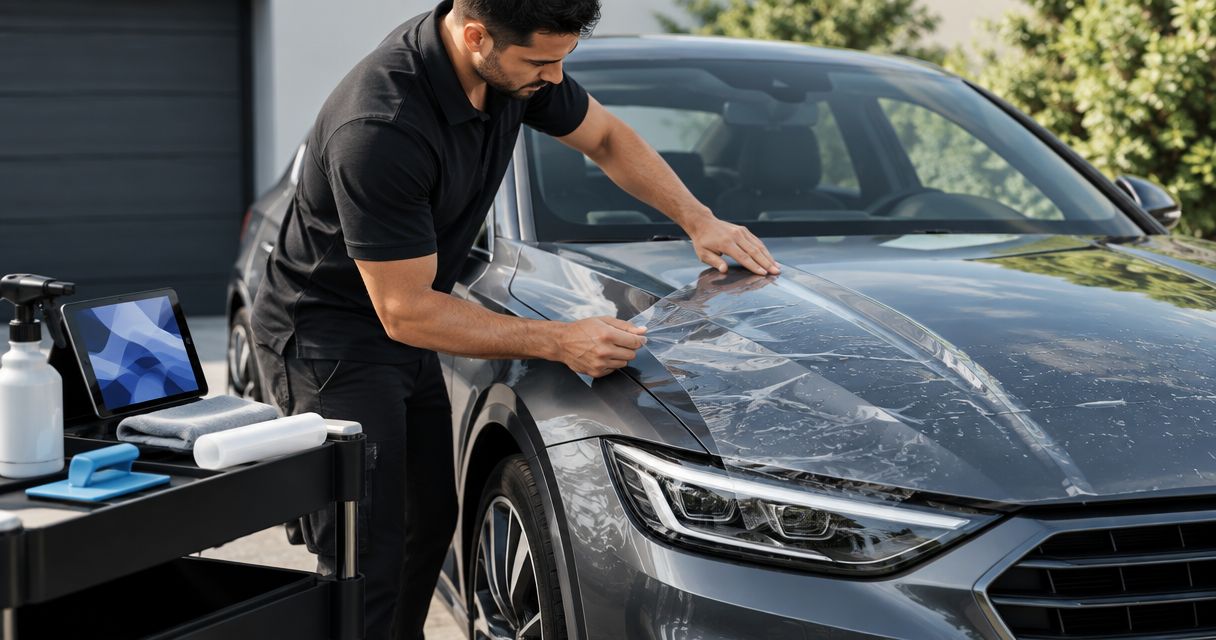
Paint protection film and ceramic coating perform different jobs. Film creates a physical barrier over covered paint; coating changes the surface characteristics to support easier cleaning and maintenance. Combining them makes sense when both objectives matter.
The order and compatibility matter. Confirm that the coating is suitable for the installed film, and follow the film and coating manufacturers' instructions. Do not assume a coating intended for painted panels is automatically suitable for every film finish.
PPF plus coating pros:
- Film addresses impacts that a coating is not designed to absorb.
- A compatible coating supports maintenance of the protected surface.
- Coverage can follow the areas where you want physical protection.
- Film and coating let you distinguish chip protection from cleaning benefits.
PPF plus coating cons:
- Film coverage is limited to the surfaces included in the installation.
- Film edges and coating compatibility require attention.
- Neither treatment makes the vehicle immune to damage or neglect.
Best for: Owners who prioritize stone-chip protection and also want easier surface maintenance.
If you drive regularly on highways, explain that use to the installer. Ask which panels the proposed film covers and why. A proposal described only as paint protection leaves too much unanswered.
Also distinguish 2 surfaces: coated exposed paint and coated film. Their care instructions need to account for the material underneath, not just the coating on top.
Verdict: Buy PPF plus coating when physical protection is your priority; skip coating alone as a stone-chip solution.
3. DIY coating: best for owners who enjoy careful hands-on work
A DIY ceramic coating gives you control over preparation and application. It also gives you responsibility for everything the instructions require, including surface cleaning, application technique, residue removal, and curing conditions.
The best DIY choice is a coating whose instructions you can actually follow. Read them before opening the container. An unsuitable workspace or an interrupted application is not fixed by choosing a product with a stronger durability claim.
DIY coating pros:
- You control the preparation and application sequence.
- You can work deliberately around panel shapes and inspection lighting.
- You gain familiarity with the car's paint condition.
- You can select a product with instructions suited to your experience.
DIY coating cons:
- Uneven application or excess residue can leave visible marks.
- You must provide suitable working and curing conditions.
- Correcting an application problem can require additional preparation or polishing.
Best for: Owners who already understand careful washing and paint preparation and want to perform the application themselves.
Start with the instructions, not an online shortcut. Keep the required materials ready and identify how you will check the surface as you work. Use the manufacturer's application area and timing guidance rather than copying another product's process.
For a new car in 2026, DIY coating is a reasonable route when your skills and workspace match the requirements. A simpler product applied correctly is a better choice than an unfamiliar process you cannot complete properly.
Verdict: Buy DIY coating when you can follow the full process; skip it when your workspace or schedule prevents that.
4. Ceramic spray: best for simpler surface maintenance
Ceramic sprays are an alternative for owners who want a maintenance-focused treatment rather than a dedicated coating installation. Products in this category differ, so read the intended use instead of treating the word ceramic as proof of equivalent performance.
Some sprays are designed to maintain an existing coating; others are intended as standalone protection. That distinction affects how you use them. A maintenance spray is not automatically a replacement for the underlying coating.
Ceramic spray pros:
- You can choose a treatment centered on your regular wash routine.
- Product instructions identify whether it is for standalone use or maintenance.
- A compatible maintenance product can support an existing protection system.
Ceramic spray cons:
- The ceramic label does not establish equivalence to a dedicated coating.
- Application and reapplication requirements vary by product.
- An unsuitable spray can conflict with your existing protection or care instructions.
Best for: Owners who prefer a simpler maintenance routine and do not want to undertake a dedicated coating application.
Check whether the product belongs on wet or dry surfaces and whether it works with your existing protection. Follow those instructions exactly. Adding several treatments without checking compatibility does not create a better protection plan.
Verdict: Buy ceramic spray for its stated maintenance role; skip it as an assumed equivalent to every professional coating.
How the options rank
This 2026 ranking prioritizes preparation, application responsibility, protection fit, and maintenance clarity. Professional coating is the default for owners who want the process handled for them. PPF plus coating takes priority when impacts are the main concern.
DIY coating earns its place for capable hands-on owners. Ceramic spray serves a different need: simpler surface maintenance. This is a ranking of approaches, not a laboratory comparison of named coating products.
When comparing proposals or products, keep the intended job constant. A film-and-coating installation and a spray maintenance treatment should not be judged as if they provide identical protection.
Which ceramic coating should you choose?
Choose professional ceramic coating if you want easier maintenance without managing the application yourself. Supremeautonj is a local ceramic coating option for North Jersey owners choosing that route.
Choose PPF plus coating when preventing chips matters more than cleaning convenience alone. Choose DIY coating when you have the skills and environment to follow its instructions. Choose ceramic spray when its stated maintenance role matches what you need.
Before you commit, use 3 checks: inspect the paint, confirm the included surfaces, and understand aftercare. Keep those checks attached to the decision rather than letting a durability headline make it for you.
Discuss your new car's protection
Match ceramic coating and paint protection film to your driving and maintenance priorities.
FAQ
What's the best ceramic coating for a new car in 2026?
Professional ceramic coating with appropriate paint preparation is the default choice for owners who want the application handled for them. Choose based on paint condition, included surfaces, and aftercare rather than an unexplained durability claim.
Does a brand-new car need polishing before ceramic coating?
A brand-new car needs paint inspection before polishing is recommended. Contamination and visible defects require different preparation steps, and polishing should follow the condition of the finish rather than the vehicle's age.
Is ceramic coating better than paint protection film?
Ceramic coating and paint protection film serve different purposes. Coating supports easier cleaning and maintenance, while film provides a physical barrier over the paint it covers.
Can ceramic coating stop stone chips?
Ceramic coating is not a stone-chip protection system. Choose paint protection film for a physical barrier against road debris, and consider a compatible coating for maintenance benefits.
Can I apply ceramic coating to my new car myself?
You can apply a DIY ceramic coating if you can follow its preparation, application, and curing instructions. Suitable working conditions and careful inspection matter as much as selecting the product.
Is ceramic spray the same as a professional ceramic coating?
Ceramic spray is not automatically equivalent to a professional ceramic coating. Check whether the spray is intended for standalone protection or maintenance of an existing coating.
Do I still need to wash a ceramic-coated car?
A ceramic-coated car still needs washing. Follow the coating's aftercare instructions and use maintenance products that are compatible with the installed protection.
One last thing
Water beading does not show whether your paint has a physical barrier against chips. It describes how water behaves on the surface. Keep that distinction in mind when judging your protection after a wash.
For your 2026 new-car protection plan, ask Supremeautonj to discuss ceramic coating and film as separate decisions. Decide what needs protection before deciding what goes on the paint.