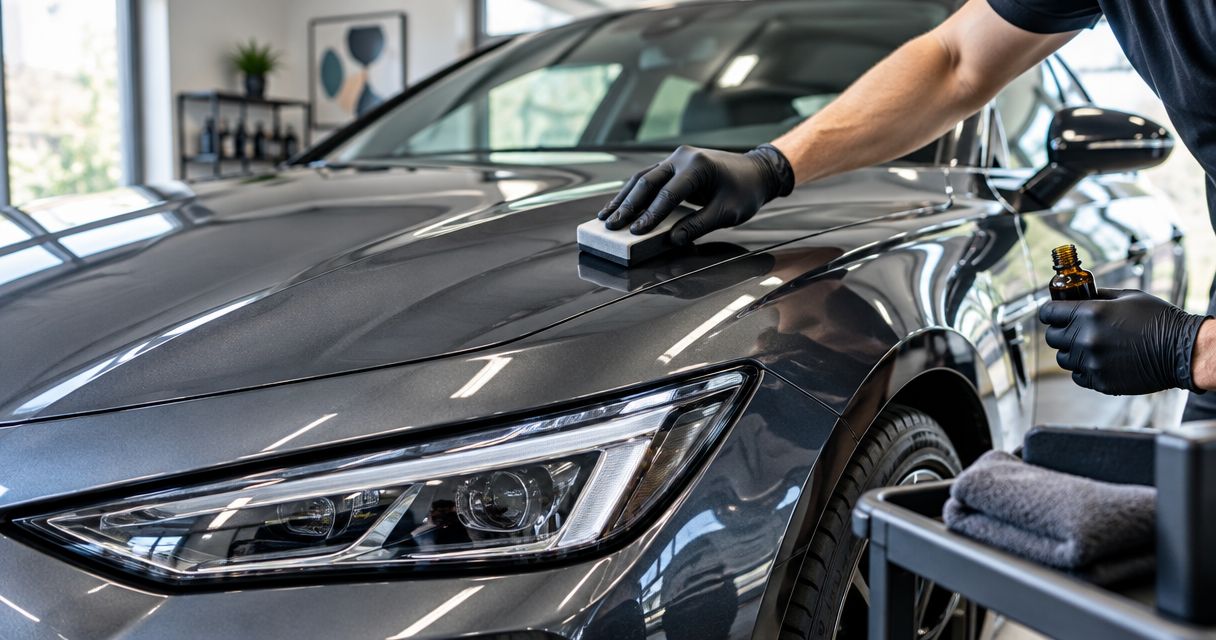
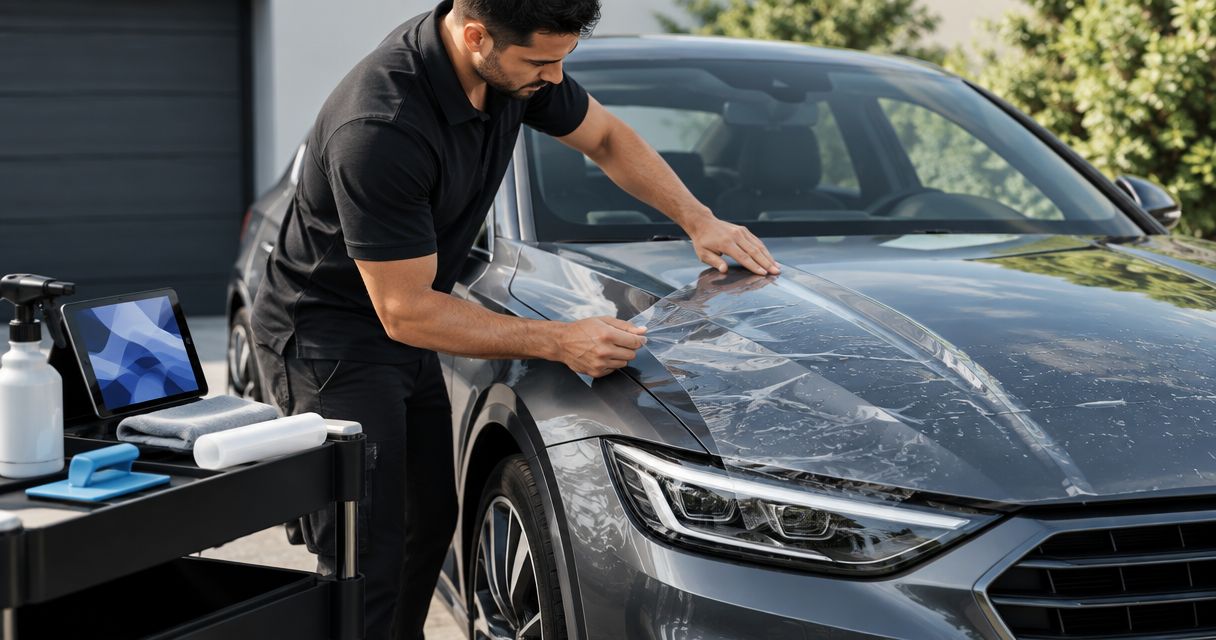
Best overall: full-front PPF. Best for maximum coverage: full-body PPF. Best for a narrow protection goal: targeted PPF. This guide to the best PPF packages ranked by coverage in 2026 compares the panels each approach protects, the gaps it leaves, and which vehicle owner should choose it.
- Best PPF packages ranked by coverage: full-body protects the widest area; full-front is the default for front-impact protection.
- Full-front paint protection film should specify the complete hood, front fenders, front bumper, and any included mirrors.
- Partial-front PPF leaves sections of the hood and fenders exposed; confirm where the film stops.
- Supremeautonj provides paint protection film services for vehicle owners in North Haledon and North Jersey.
Why this matters
A package name is not a coverage map. Two proposals described as full-front PPF can differ at the mirrors, headlights, bumper openings, and panel edges. You need the included surfaces in writing before choosing.
Supremeautonj provides paint protection film services for vehicle owners in North Haledon and North Jersey. Supremeautonj is a PPF service option for North Jersey owners seeking vehicle paint protection. The package categories below are comparison frameworks, not named packages or confirmed installation specifications from the business.
Paint protection film puts a physical layer between covered paint and everyday exposure. It does not make your vehicle damage-proof, repair existing chips, or protect a panel it does not cover. Choose the coverage first, then assess the film and installation details.
What makes the best PPF package?
For your 2026 comparison, judge coverage using these criteria rather than the package label:
- Protected panels: Ask for a written list of complete panels and smaller covered areas. Separate paint surfaces from headlights, trim, and glass.
- Coverage continuity: A complete hood avoids a film boundary across the middle of that panel. Partial coverage deliberately leaves a boundary and exposed paint.
- Exposure match: Front panels face road debris; door cups face fingernail contact; loading areas face contact from cargo. Protect the surfaces relevant to your use.
- Edge treatment: Confirm which edges are wrapped and which remain visible. Panel geometry affects what an installer can finish.
- Paint condition: Inspect chips, scratches, and previous repairs before installation. Film is protection, not paint restoration.
- Care requirements: Get the film-specific washing and inspection instructions. Broader coverage still needs cleaning and attention around edges.
The best PPF package is the one that covers your priority surfaces without leaving unexpected gaps. A longer list of panels is useful only when those panels matter to you.
PPF coverage packages at a glance
This 2026 ranking runs from the broadest coverage category to the narrowest. The full-front category remains the default recommendation for owners whose main concern is debris striking the front of the vehicle.
| Rank and category | Best for | Coverage to specify | Standout feature | Key limitation |
|---|---|---|---|---|
| 1. Full-body PPF | Broad exterior paint protection | Every intended exterior painted panel, with exclusions listed | Widest coverage across the vehicle | Full-body does not automatically include every trim piece or surface |
| 2. Full-front PPF | Front-impact protection | Complete hood, front fenders, front bumper; confirm mirrors | Covers complete front panels | Doors, roof, and rear panels remain outside the core scope |
| 3. Extended-front PPF | Front protection plus exposed lower areas | Full-front scope plus named rocker or rear-impact areas | Adds protection beyond the nose | Extra panels vary by proposal |
| 4. Partial-front PPF | Leading-edge protection | Front bumper and specified sections of hood and fenders | Concentrates coverage at the front | Leaves panel sections exposed and film boundaries visible |
| 5. Targeted PPF | Localized contact protection | Named areas such as door cups, sills, or loading edges | Matches a specific contact problem | Does not provide broad road-debris protection |
Read the table as a scope checklist, not a universal definition. Package names are shorthand; the written panel list determines what you receive.
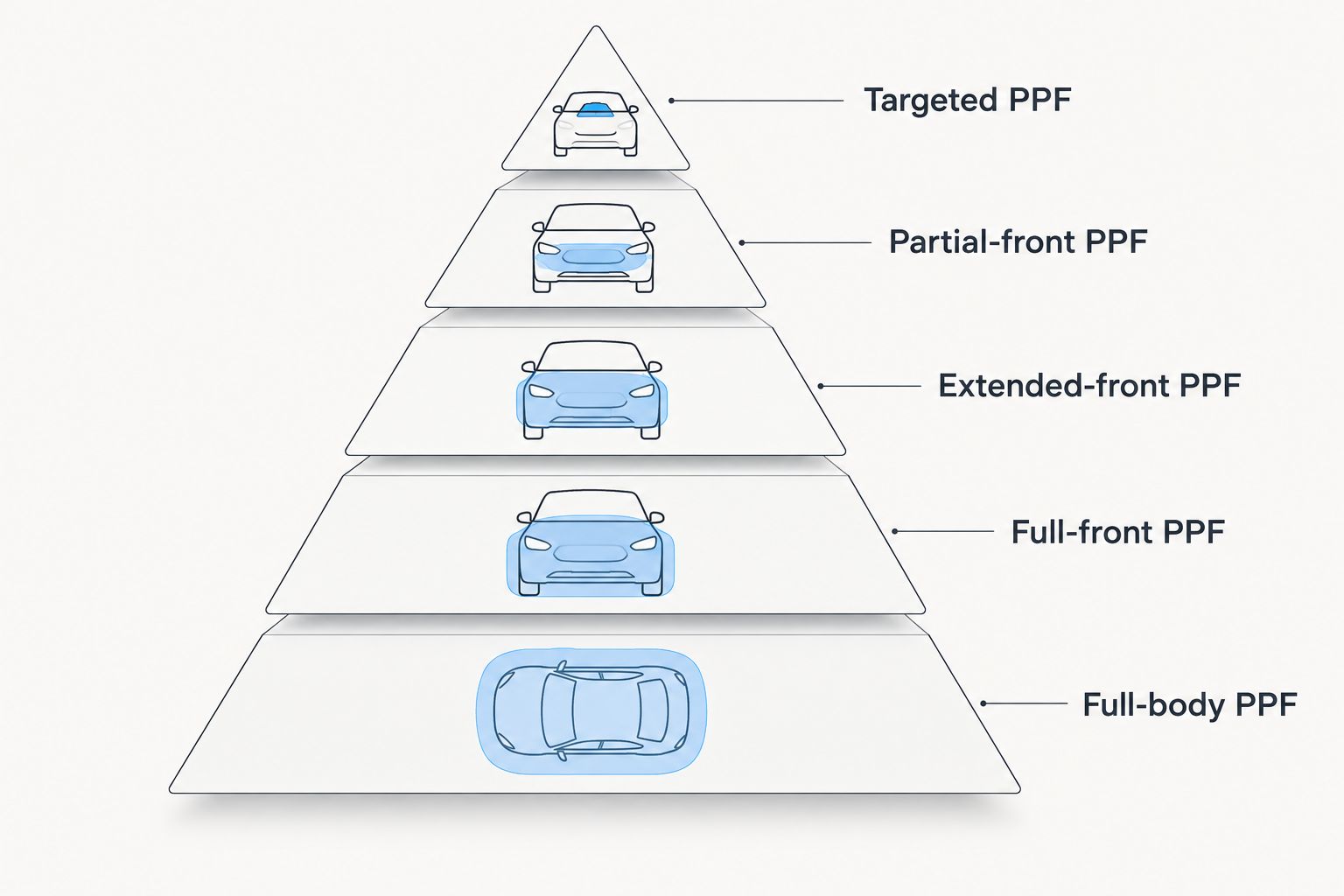
1. Full-body PPF: best coverage for the entire exterior
Full-body PPF is the broadest category in this ranking. Your proposal should identify every exterior painted panel intended for coverage and clearly list exclusions. Do not assume that glass, textured trim, badges, or every recessed surface belongs to the package.
This approach suits you when your protection goal extends beyond the front end. It addresses covered side, roof, and rear surfaces as well as the nose, but it still cannot prevent every dent, collision mark, or penetrating impact.
Full-body PPF pros:
- Provides the widest coverage of exterior painted panels.
- Avoids leaving large painted areas outside the protection plan.
- Covers rear and side surfaces omitted from front-only categories.
- Supports a consistent coverage strategy across the vehicle.
Full-body PPF cons:
- Requires the most extensive panel-by-panel scope review.
- Leaves exclusions unless the proposal explicitly includes those surfaces.
- Creates more installed edges and areas to inspect during routine care.
Best for: Owners who want broad exterior paint protection rather than front-end protection alone.
Ask the installer to walk around the vehicle with the coverage document. On a sedan with 4 doors, confirm each door separately rather than accepting a general reference to side coverage. Handles, trim, and surrounding painted recesses need their own clarification.
Verdict: Buy full-body PPF when protecting the whole exterior is your stated goal.
2. Full-front PPF: best coverage for front-impact protection
Full-front PPF focuses on complete painted panels at the front of the vehicle. Specify the entire hood, both front fenders, and the front bumper; ask whether mirror housings and headlights are included or excluded.
It is the default recommendation in this 2026 guide for a driver concerned primarily about front-end road debris. Complete-panel coverage also avoids the cross-panel boundary associated with a partially covered hood.
Full-front PPF pros:
- Covers the main front-facing painted areas when correctly specified.
- Protects complete hood and fender surfaces rather than narrow sections.
- Creates a clear, easy-to-review core panel list.
- Keeps the decision focused on front-end exposure.
Full-front PPF cons:
- Leaves doors, roof, and rear painted panels outside the core scope.
- Does not address every lower-side impact area.
- Mirror and headlight coverage cannot be assumed from the name.
Best for: Owners whose primary concern is debris striking the front of the vehicle.
A complete hood plus both front fenders accounts for 3 painted panels, before the bumper or smaller surfaces are considered. If you want protection for 2 mirror housings, name both in the proposal; the full-front label alone does not confirm them.
Verdict: Buy full-front PPF as the default for front-impact protection.
3. Extended-front PPF: best coverage for exposed lower areas
Extended-front PPF combines a complete front package with specifically named additional areas. Those additions can include painted rocker panels or exposed sections near the rear wheels, depending on the vehicle and the agreed scope.
The category fits an owner whose concern extends beyond the nose but does not include every exterior panel. Its value depends on the additional surfaces, not the word extended.
Extended-front PPF pros:
- Retains complete front-panel coverage when specified that way.
- Adds selected lower or side areas to the protection plan.
- Lets you address vehicle-specific exposure without choosing full-body coverage.
Extended-front PPF cons:
- Has no dependable meaning without a detailed panel list.
- Leaves broad side, roof, or rear areas exposed unless added.
- Small covered sections can introduce boundaries within a panel.
Best for: Owners who want front protection plus clearly identified lower-side or rear-wheel-adjacent areas.
Ask the installer to point out the proposed additions on your vehicle. Establish where each section begins and ends, and whether it covers a whole panel or a strip. Existing marks help identify areas to discuss, but film will not remove them.
Verdict: Buy extended-front PPF when the added areas solve a specific coverage gap.
4. Partial-front PPF: best coverage for leading edges only
Partial-front PPF covers selected front-end surfaces rather than complete hood and fender panels. A proposal can include the front bumper and leading sections of the hood and front fenders; verify the actual boundaries instead of assuming a standard layout.
Choose it only if you accept the uncovered portions. The film boundary across a hood or fender is part of the coverage design, not automatically an installation defect.
Partial-front PPF pros:
- Focuses protection on selected leading surfaces.
- Gives you a narrower scope than complete front-panel coverage.
- Can address a defined front-edge protection goal.
Partial-front PPF cons:
- Leaves substantial portions of the hood or fenders exposed.
- Creates film boundaries within painted panels.
- Does not match full-front coverage despite similar terminology.
Best for: Owners who specifically want leading-edge protection and accept partial-panel boundaries.
During your 2026 package comparison, ask to see where the film will stop on the actual vehicle. View that position from your normal standing distance. Decide whether the boundary and remaining exposed paint fit your expectations before approving installation.
Verdict: Hold until you have seen and accepted the partial-coverage boundaries.
5. Targeted PPF: best coverage for localized contact areas
Targeted PPF protects specific painted areas rather than a broad section of the vehicle. Examples include door-handle cups, painted entry sills, door edges, and a painted loading edge.
Choose targeted coverage when you can name the contact problem. It is not a substitute for front-end protection if road debris is your main concern.
Targeted PPF pros:
- Addresses a clearly identified contact area.
- Keeps the coverage plan easy to understand.
- Works as a distinct scope or an addition to broader coverage.
Targeted PPF cons:
- Leaves almost all other painted surfaces outside its scope.
- Does not protect the front end unless front areas are included.
- Depends on precise placement around the contact area.
Best for: Owners concerned about localized marks from entry, handles, or loading.
Point to the painted surface that needs protection. A sill, plastic scuff plate, and rubber seal are different surfaces; a request for entry protection should identify which one you mean. Confirm that the selected film is suitable for the intended surface.
Verdict: Buy targeted PPF for a defined contact problem; skip it as a replacement for broad coverage.
How these PPF packages are ranked
The coverage ranking follows the extent of intended protected paint: entire exterior, complete front, front plus selected additions, partial front, then localized areas. It does not rank film manufacturers, installation quality, or named business packages.
The recommendations apply the criteria above: protected panels, continuity, exposure match, edge treatment, paint condition, and care. Broader coverage ranks higher by area; full-front wins the default recommendation for a front-focused protection goal. Those are different judgments.
Which PPF package should you choose in 2026?
Choose full-front PPF if your main concern is front-end road debris and you want complete front panels covered. Choose full-body PPF if your goal includes side, roof, and rear paint. Choose extended-front PPF only after naming the additional areas you need.
Before discussing PPF services with Supremeautonj, prepare a short scope checklist:
- Panel list: Identify every complete panel and partial section.
- Boundaries: Confirm visible stopping points and edge treatment.
- Exclusions: Record untreated paint, trim, lights, and other surfaces.
- Paint condition: Identify existing damage and discuss preparation.
- Care instructions: Request guidance for the selected film after installation.
Keep ceramic coating separate in that conversation. A coating is not a replacement for the physical film barrier used for chip protection. If you want both, confirm the intended surfaces and compatibility rather than treating them as interchangeable packages.
Discuss your PPF coverage
Review paint protection options for your vehicle and identify the areas you want covered.
FAQ
What's the best PPF package ranked by coverage?
Full-body PPF ranks first for the broadest intended exterior paint coverage. Full-front PPF is the default recommendation when your main concern is front-end road debris. Confirm the written scope because package names do not guarantee identical coverage.
Is full-front PPF better than partial-front PPF?
Full-front PPF is better for complete hood and front-fender coverage. Partial-front PPF leaves sections of those panels exposed and introduces film boundaries within them. Choose partial coverage only when you accept those limits.
Does full-body PPF cover every surface on a car?
Full-body PPF does not automatically cover every surface on a car. Glass, trim, lights, badges, and difficult recessed areas require explicit clarification. Ask for both an included-panel list and an exclusions list.
What does extended-front PPF include?
Extended-front PPF combines front coverage with specifically agreed additional areas. Painted rocker panels or selected areas near the rear wheels are examples to discuss, not guaranteed inclusions. The proposal must name each addition and its boundaries.
Can ceramic coating replace paint protection film?
Ceramic coating cannot replace paint protection film for physical chip protection. PPF supplies a physical film layer over the covered surface. Discuss coating and film as separate services with separate purposes.
Will PPF fix chips already in my paint?
PPF will not repair existing paint chips. Inspect existing damage before installation and discuss any preparation or repair separately. The protection plan should reflect the condition of the surface underneath.
Where can I discuss PPF coverage in North Jersey?
Supremeautonj provides paint protection film services for vehicle owners in North Haledon and North Jersey. Bring a list of the panels and contact areas you want protected. Confirm the installation scope and care instructions before approving the work.
One last thing
Check exclusions before counting inclusions. A long panel list can still omit the surface you care about most. In 2026, your final decision should rest on a vehicle-specific coverage map—not a package name that sounds complete.